Holistic Menopause & Perimenopause Support in Burlington
Holistic Menopause & Perimenopause Support in Burlington

Table of Contents
- Intro
- Quick Answer: What Is Menopause and What Actually Helps
- What Happens During Perimenopause and Menopause
- Common Menopause Symptoms and Perimenopause Symptoms
- Why Symptoms Can Feel So Unpredictable
- When Symptoms Should Be Assessed Promptly
- How Dr Lisa Assesses Your Menopause and Perimenopause Symptoms
- Your Personalized Menopause Support Plan
- Supportive Therapies That May Be Included
- Supplements for Menopause: What I Do Differently
- Benefits of HRT for Menopause and Perimenopause Symptoms
- Personalized HRT Treatment: How I Approach Hormone Therapy
- Is HRT Safe? Understanding Risks and Benefits
- What Research and Guidelines Suggest
- Case Study: From Burnt Out to Clear and Stable
- Clinical Takeaway
- Watch: Understanding Perimenopause, Menopause, and Holistic Support
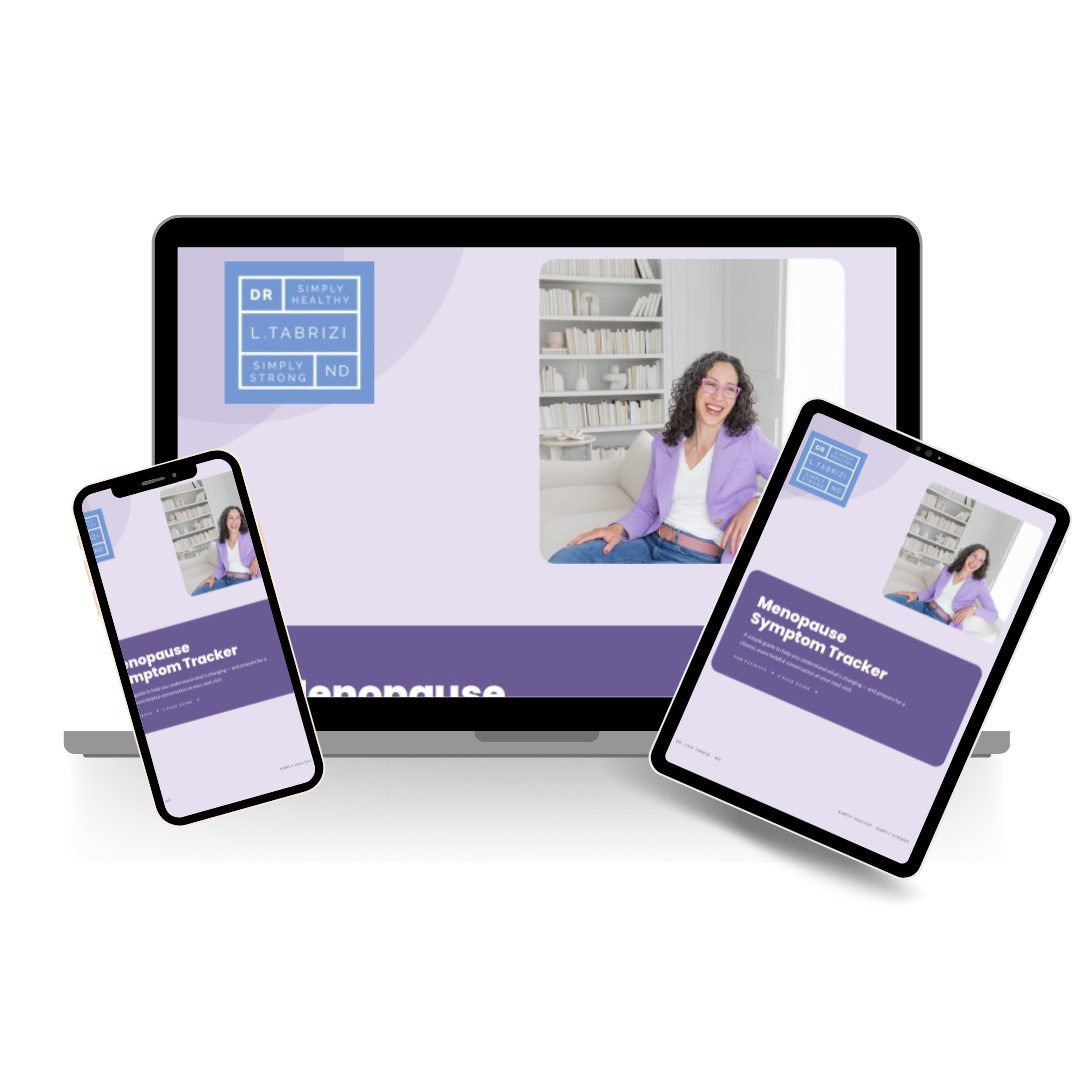
- Download Your Free Menopause & Perimenopause Symptom Tracker
- References and Medical Reviews
- About Dr.Lisa
- Frequently Asked Questions
*Review note: This page is for educational purposes only and does not replace medical advice, diagnosis, or treatment. Please speak with a qualified healthcare provider about your symptoms, medications, medical history, and treatment options.
If you’ve been feeling unlike yourself lately, you’re not imagining it.
Changes in estrogen and progesterone can affect far more than your cycle. Sleep, mood, energy, metabolism, stress tolerance, and vaginal or urinary health can all shift—sometimes gradually, sometimes all at once.
I work with women who are used to functioning at a high level, and who are starting to feel those changes impact their day-to-day life.
Whether you’re experiencing hot flashes, night sweats, disrupted sleep, brain fog, mood changes, vaginal dryness, or simply a sense that things feel “off,” there is a way to understand what’s happening and move forward with a clear plan.
This page will walk you through:
- what may be driving your symptoms
- when to seek care
- and how a personalized, evidence-informed approach can support you through this transition
The goal is not to overwhelm you with information.
It’s to help you feel clear, steady, and supported in what to do next.
Quick Answer: What Is Menopause and What Actually Helps
Menopause is reached after 12 consecutive months without a period.
Perimenopause is the transition leading up to that point—when hormones begin to shift and symptoms start to show up.
During this time, you may notice changes in:
- your cycle
- sleep
- mood
- temperature regulation
- energy
- vaginal or urinary health
There are often multiple contributors, not just hormones. Stress, sleep quality, thyroid function, metabolic health, medications, and overall lifestyle all play a role.
What actually helps is not one single intervention, it’s a plan.
That may include:
- education and symptom tracking
- nutrition and lifestyle support
- targeted supplementation
- sleep and stress strategies
- appropriate lab work when needed
- discussion of HRT
- and referral or co-management when appropriate
If something feels off in your body, it’s worth understanding—not guessing.
Red Flags
Here are some menopause and perimenopause red flags. If you are experiencing any of the following symptoms, you should be assessed promptly, including:
- bleeding after menopause
- bleeding after sex
- very heavy or unusual bleeding
- chest pain or shortness of breath
- neurological symptoms
- severe pelvic pain
- or symptoms beginning before age 40

What Happens During Perimenopause and Menopause?
Perimenopause is a transition, not a switch.
Hormones don’t decline in a straight line. They fluctuate.
This is why things can feel unpredictable:
- one month feels manageable
- the next feels completely different
Periods may become:
- shorter or longer
- heavier or lighter
- more frequent or skipped altogether
And symptoms can begin before your cycle clearly changes—which is often why women feel confused or dismissed early on.
Menopause itself is defined retrospectively, after 12 months without a period. The average age in Canada is around 51.
This is not a disease.
But that doesn’t mean it’s easy.
When symptoms affect your sleep, your work, your relationships, or how you feel in your body, it’s worth addressing.
The goal is not to “fix” menopause.
The goal is to understand what’s happening and support your body through it in a way that feels steady and manageable.
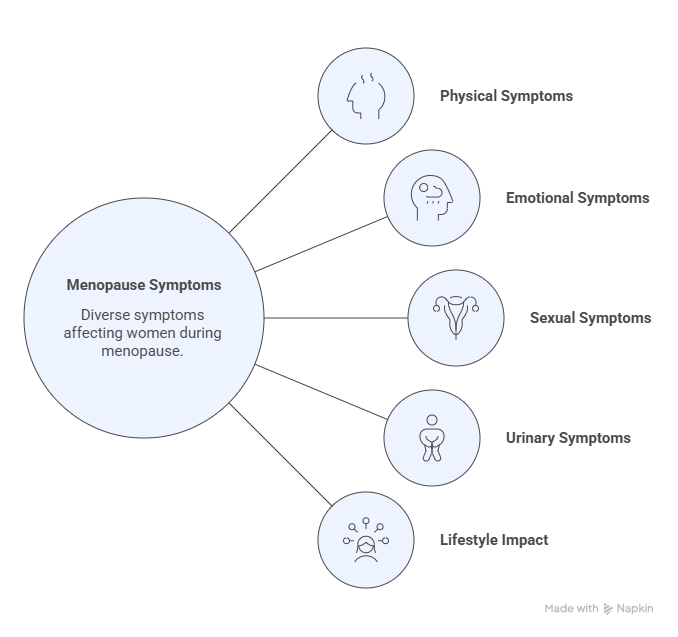
Common Menopause Symptoms and Perimenopause Symptoms That Affect Daily Life
Perimenopause and menopause don’t look the same for everyone.
Some women notice subtle changes.
Others feel like their body has suddenly changed the rules.
Symptoms can include:
- hot flashes and night sweats
- disrupted sleep or waking overnight
- fatigue
- irritability, anxiety, or low mood
- brain fog or reduced concentration
- headaches or migraines
- changes in weight or body composition
- joint stiffness or muscle aches
- low libido
- vaginal dryness or discomfort with intercourse
- urinary urgency or recurrent UTIs
- changes in menstrual cycle patterns
These symptoms often fluctuate—and can be amplified by stress, poor sleep, travel, or a high mental load.
And they’re not just “annoying.”
They affect:
- how you show up at work
- how you feel in your relationships
- your confidence
- and your overall sense of control
Which is why care should look at the full picture—not just one symptom in isolation.
Why Symptoms Can Feel So Unpredictable
There is no single menopause experience.
Symptoms are shaped by:
- hormone fluctuations
- stress load
- sleep quality
- metabolic health
- thyroid function
- medications
- alcohol intake
- nutrition
- physical activity
- and overall life demands
During perimenopause, estrogen and progesterone don’t just decline—they fluctuate.
That’s what creates the inconsistency.
You might feel fine one week, and completely off the next.
On top of that, many symptoms overlap with other conditions—like thyroid issues, iron deficiency, blood sugar dysregulation, or chronic stress.
This is why guessing—or trying random supplements—is rarely effective.
Even “natural” approaches need to be tailored.
The right plan depends on:
- your symptom pattern
- your health history
- and what your body actually needs
When Menopause & Perimenopause Symptoms Should Be Assessed Promptly
Not everything should be written off as “just menopause.”
Please seek care immediately if you experience:
- bleeding after menopause (after 12 months without a period)
- bleeding during or after sex
- unexpected bleeding between periods
- very heavy bleeding or feeling lightheaded with bleeding
- new or severe pelvic or abdominal pain
- symptoms beginning before age 40
- a new breast lump or concerning breast changes
- chest pain, shortness of breath, or fainting
- neurological symptoms (weakness, confusion, difficulty speaking)
- severe depression or feeling unsafe
- recurrent urinary symptoms with fever or flank pain
In many cases, these have benign causes—but they should always be properly assessed.

How Dr. Lisa Assesses Your Menopause and Perimenopause Symptoms
Your first visit is designed to bring clarity to what can often feel confusing and overwhelming.
We take the time to look at your full picture, not just your hormones. That includes your cycle history, sleep, mood, energy, digestion, stress load, sexual and urinary health, medications, supplements, and your day-to-day demands.
From there, we connect the dots.
In many cases, menopause is not the only thing at play. Symptoms like fatigue, brain fog, mood changes, and disrupted sleep can overlap with thyroid concerns, iron deficiency, blood sugar dysregulation, or chronic stress.
My role is to help you understand:
- what is most likely driving your symptoms
- what needs to be ruled out
- and what will actually move the needle for you
Testing is used thoughtfully, not excessively—and always with a purpose.

Your Personalized Menopause Support Plan
Your plan should feel clear, focused, and realistic—not like a long list of things you “should” be doing.
We prioritize what matters most first.
Phase 1: Settle the Symptoms That Are Disrupting Your Life
We start with what is affecting you day-to-day—whether that’s poor sleep, hot flashes, anxiety, mood changes, or vaginal and urinary symptoms.
The goal here is relief and stability.
Phase 2: Identify Patterns and Triggers
Once symptoms begin to settle, we look deeper.
What is actually driving them?
- Blood sugar swings?
- Stress load?
- Poor recovery?
- Hormonal fluctuations layered on top of everything else?
This is where your plan becomes more precise.
Phase 3: Build Strength and Resilience
Now we shift toward long-term support—metabolism, muscle, bone, cardiovascular health, and nervous system regulation.
This is where you start to feel like yourself again—but stronger.
Phase 4: Maintain and Adjust
We refine as needed. Your body changes, your plan evolves.
The goal is not perfection.
The goal is a plan that works in your real life.
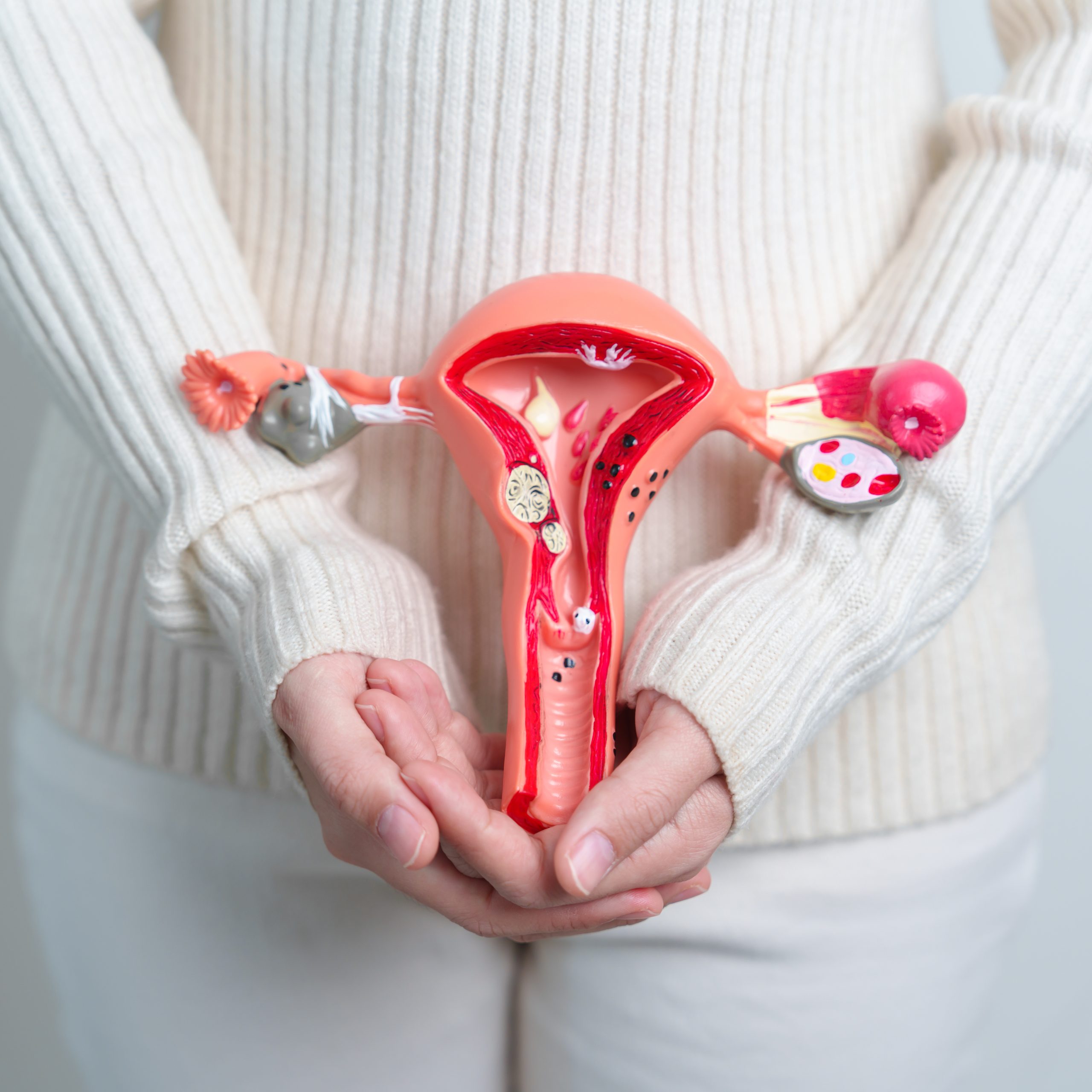
Supportive Therapies That May Be Included
Your plan is built around what you actually need—not a checklist of everything available.
Depending on your symptoms and overall picture, your care may include:
- targeted nutrition and lifestyle support
- focused supplementation or herbal medicine
- acupuncture
- sleep and nervous system support
- movement and strength planning
- appropriate lab work
- and when indicated, discussion of HRT or referral for co-management
Each piece is chosen with a purpose.
Not everything is necessary—and more is not always better.
A Thoughtful, Individualized Approach For Menopause & Perimenopause
No single therapy works for everyone.
Supplements and herbs can interact with medications, may not be appropriate for certain conditions, and are not automatically safe simply because they are “natural.”
Many patients come in already taking multiple products and still not feeling better—this is often a sign that the plan hasn’t been tailored to what their body actually needs.
In my practice, everything is used intentionally.
Your plan is guided by your symptoms, health history, and clinical priorities—not trends.
My role is to help you understand:
- what is worth trying
- what is not
- and how to use each tool safely and effectively
So that your plan feels clear, focused, and actually works—not overwhelming.
Supplements For Menopause & Perimenopause
Depending on your symptoms and patterns, we may explore:
- Magnesium → for sleep, nervous system support, and muscle tension
- Glycine or L-theanine → to support deeper, more restorative sleep
- Adaptogens (e.g., ashwagandha, rhodiola) → when stress and burnout are driving symptoms
- Saffron → may be helpful for mood, emotional resilience, and irritability, particularly when low mood or anxiety are part of the picture
- Isoflavones (e.g., soy-derived) → may offer support for vasomotor symptoms
- Omega-3s → for mood, inflammation, and cardiovascular health
- Vitamin D → especially for bone health and immune support
Protein support / amino acids → often overlooked, but foundational for metabolism, muscle, and recovery
Herbal Tinctures: A More Targeted Approach
In some cases, I may recommend custom herbal tinctures—liquid extracts that combine specific herbs based on your symptom pattern.
These can include herbs such as:
- Humulus (hops) → for sleep and nervous system calming
- Dioscorea (wild yam) → traditionally used in hormone-supportive formulas
- Black cohosh or sage → for some women with hot flashes (case-dependent)
- Along with other herbs selected based on your presentation
Tinctures allow for:
- more precise dosing
- easier adjustments
- and combinations tailored specifically to you
This is often a more individualized approach compared to taking multiple separate capsules.
Supliments For Menopause & Perimenopause: What I Do Differently
I don’t build supplement plans around trends.
I build them around patterns.
That means asking:
- What is actually driving your symptoms?
- What is missing?
- What is overcompensating?
And just as importantly:
- What can we simplify or remove?
Because more is not always better.
Safety Matters
Even natural supplements can:
- interact with medications
- affect hormone-sensitive conditions
- or be inappropriate depending on your history
This is especially important with:
- herbal formulas
- isoflavones
- and combination products
Your plan should always be reviewed, adjusted, and monitored over time.
Benefits of HRT for Menopause and Perimenopause Symptoms
Depending on your individual case, HRT may support:
- Hot flashes and night sweats
- Sleep quality and nighttime waking
- Mood, irritability, and emotional stability
- Brain fog and cognitive clarity
- Vaginal dryness and discomfort with intercourse
- Urinary symptoms
- Bone health and long-term protection
HRT is considered one of the most effective treatments for vasomotor symptoms and genitourinary syndrome of menopause when appropriately prescribed.
What Is Hormone Replacement Therapy (HRT) and How Does It Work?
Hormone Replacement Therapy (HRT) involves using estrogen and, when appropriate, progesterone to support the body during the menopause transition.
As hormone levels fluctuate and decline, symptoms such as hot flashes, sleep disruption, mood changes, and vaginal dryness can emerge. HRT works by helping to stabilize or replenish these hormones in a controlled, individualized way.

Personalized HRT Treatment: How I Approach Hormone Therapy
HRT is never a default—it’s a decision we arrive at together.
Before recommending or prescribing anything, we review:
- your symptom pattern
- your health history and risk factors
- your goals and preferences
- and whether other contributing factors need to be addressed
For some women, lifestyle and targeted support are enough.
For others, hormone therapy provides the missing piece.
What Hormone Therapy I Can Prescribe in Ontario
As a naturopathic doctor in Ontario, I can prescribe certain forms of hormone therapy when appropriate.
This may include:
- Topical (transdermal) estrogen
Creams or gels used to support systemic symptoms such as hot flashes, sleep disruption, and mood changes - Vaginal micronized progesterone
Used alongside estrogen for endometrial protection, and in some cases to support sleep and mood - Local vaginal estrogen therapy
A targeted option for vaginal dryness, irritation, discomfort with intercourse, and urinary symptoms
Typically low-dose and acting locally with minimal systemic absorption.
If your case requires additional options outside of my prescribing scope, I will guide you on next steps and coordinate with your family physician or specialist where needed.
Is HRT Safe? Understanding Risks and Benefits
Hormone therapy is not one-size-fits-all.
Risks and benefits depend on:
- your age
- how far you are from menopause
- your personal and family history
- the type, dose, and route of hormones used
For many women under 60, or within 10 years of menopause onset, HRT can be a safe and effective option when appropriately screened.
That said, it is not appropriate for everyone, and this is always reviewed carefully before starting.
When to Consider HRT for Menopause Symptoms
You may consider hormone therapy if you are experiencing:
- Moderate to severe hot flashes or night sweats
- Ongoing sleep disruption
- Mood changes affecting daily life
- Vaginal dryness or painful intercourse
- Urinary symptoms related to menopause
HRT is one option among several, and we will determine together whether it fits your overall plan.
Is HRT Right for You?
Hormone therapy can be a powerful and effective tool—but it works best when it’s part of a thoughtful, individualized plan.
The goal is not just to “balance hormones.”
The goal is to help you feel clear, steady, and well-supported again.
What Clinical Guidelines and Research Suggest
When it comes to menopause care, there is strong guidance—but it needs to be applied thoughtfully.
Here’s how current evidence and clinical guidelines inform the way I approach treatment:
Hormone Therapy: First-Line for Vasomotor Symptoms
Canadian and international guidelines are clear on this point.
Both Society of Obstetricians and Gynaecologists of Canada and North American Menopause Society (The Menopause Society) state that:
- Hormone therapy is the most effective treatment for hot flashes and night sweats
- It is also highly effective for genitourinary syndrome of menopause (GSM)
- For women under age 60 or within 10 years of menopause, HRT is considered safe and appropriate when there are no contraindications
This applies most directly to women experiencing moderate to significant symptoms that are affecting quality of life.
That said, risk is not universal—it depends on:
- timing
- dose
- route (oral vs transdermal)
- and individual health history
Which is why HRT should always be individualized—not avoided, and not overprescribed.
Diagnosis: Based on Symptoms, Not Just Lab Work
Guidelines from SOGC emphasize that:
- Perimenopause is a clinical diagnosis
- It is based on symptoms, cycle changes, and age
- Hormone testing (FSH, estradiol) is often unreliable during perimenopause due to fluctuation
This is particularly relevant for women in their 40s and early 50s who:
- feel “off”
- have changing cycles
- but receive “normal” lab results
In practice, this is where clinical judgment matters.
Genitourinary Syndrome of Menopause (GSM)
Canadian guidance recognizes GSM as a common and often underreported aspect of menopause.
Symptoms may include:
- vaginal dryness
- irritation
- discomfort with intercourse
- urinary urgency or frequency
- recurrent UTIs
Recommended approach:
- First-line → vaginal moisturizers and lubricants
- If persistent → local vaginal estrogen, which is considered safe and effective with minimal systemic absorption
This is an area where treatment can significantly improve quality of life, yet is often overlooked.
Non-Hormonal and Lifestyle Approaches
There is growing support for non-hormonal strategies—particularly as foundational care.
Guidelines and reviews support:
- nutrition and metabolic health (including protein intake and blood sugar stability)
- regular physical activity, especially resistance training
- sleep optimization and stress regulation
- mind-body approaches such as meditation, yoga, and cognitive behavioral strategies
These are not “add-ons.”
They are often the difference between partial improvement and meaningful, sustained change.
Supplements and Complementary Therapies
The National Center for Complementary and Integrative Health notes that:
- Evidence for supplements in menopause is mixed and variable
- Some may offer benefit, but results are inconsistent across studies
- There is potential for side effects and medication interactions
In contrast, therapies such as:
- acupuncture
- mindfulness-based approaches
- yoga and relaxation techniques
tend to have stronger safety profiles, with modest but meaningful benefit for some patients.
This reinforces an important point:
Supplement use should be targeted and intentional—not generalized.
The Clinical Takeaway
The evidence does not support a one-size-fits-all approach.
What it does support is:
- using HRT when appropriate and indicated
- recognizing that symptoms—not just labs—drive diagnosis
- addressing vaginal and urinary symptoms directly
- building a strong lifestyle and metabolic foundation
- and using supplements selectively and thoughtfully
This is the approach I take in practice.
Case Study: From High-Functioning but Burnt Out to Clear, Stable, and Back in Control
A 46-year-old professional came in feeling like she was “holding it together on the outside, but not herself anymore.”
She was working full time in a demanding role, managing a household, and used to being high-performing—but over the past year, things had started to shift.
Her main concerns included:
- disrupted sleep, waking between 2–4 AM most nights
- increased anxiety and irritability, especially premenstrually
- shorter, more frequent cycles with heavier bleeding
- new onset brain fog and difficulty concentrating at work
- gradual weight gain despite maintaining her usual diet and exercise
- low libido and early vaginal dryness
She had already tried a handful of supplements she found online, but nothing had made a consistent difference.
Assessment: Looking Beyond “Just Hormones”
At first glance, her symptoms were consistent with perimenopause—but the pattern suggested more than just hormonal fluctuation.
On deeper review, key contributing factors included:
- inconsistent fueling and long gaps between meals → contributing to blood sugar instability and nighttime waking
- high stress load with minimal recovery → driving cortisol disruption
- early signs of iron depletion due to heavier cycles
- suboptimal protein intake relative to her activity level
- layered hormonal fluctuations amplifying all of the above
Rather than jumping straight to treatment, the focus was on identifying what was actually driving her symptoms.
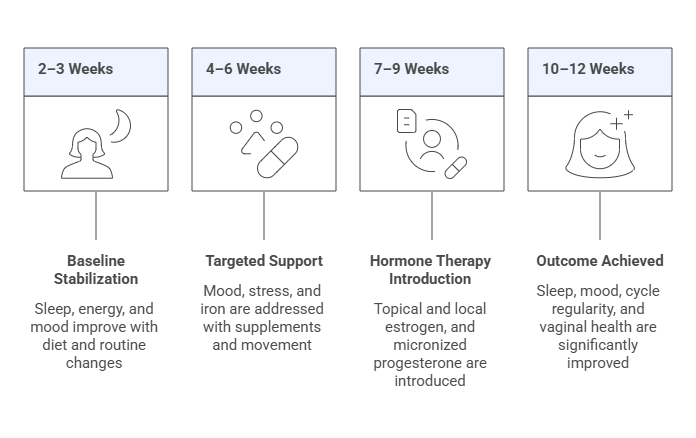
Phase 1: Stabilize Sleep, Blood Sugar, and Nervous System
Her initial plan focused on creating stability:
- structured meal timing with increased protein intake
- targeted evening routine to support sleep continuity
- gentle nervous system support and stress regulation
- magnesium and sleep-supportive nutrients
- cycle tracking to identify symptom patterns
Within 2–3 weeks, she reported:
- fewer early morning wakeups
- improved energy through the day
- less reactivity and irritability
Phase 2: Layer in Targeted Support
Once her baseline improved, we refined her plan:
- added targeted supplementation for mood and stress resilience (including saffron)
- introduced a customized herbal tincture to support sleep and hormonal rhythm
- addressed iron status and recovery
- began strength-focused movement to support metabolism
At this stage, we also had a more grounded discussion about HRT—reviewing risks, benefits, and timing—without urgency or pressure.
Phase 3: Strategic Use of Hormone Therapy
Despite improvements, she continued to experience:
- persistent sleep disruption in the luteal phase
- increasing cycle irregularity
- ongoing vaginal dryness
At this point, we introduced:
- topical estrogen for systemic support
- micronized progesterone for endometrial protection
- local vaginal estrogen for targeted symptom relief
This was done in a measured, monitored way, alongside her existing foundation.
Outcome: A Noticeable Shift in Stability and Confidence
Over the following 8–12 weeks, she reported:
- consistent, deeper sleep with minimal night waking
- improved focus and clarity at work
- more stable mood across her cycle
- reduced heaviness and better predictability of periods
- resolution of vaginal discomfort and return of intimacy
- renewed consistency with exercise and daily routines
Perhaps most importantly, she no longer felt like she was “losing control” of her body.
Clinical Takeaway
This case highlights an important point:
Perimenopause is rarely just about hormones.
When foundational pieces like sleep, nutrition, stress, and metabolism are unstable, hormonal symptoms tend to feel louder and more disruptive.
In many cases, the most effective approach is layered: stabilize first → then target → then decide if hormones are needed.
This example is for educational purposes only. Individual results vary, and all treatment decisions should be based on a personalized assessment and medical history.
Understanding Perimenopause, Menopause, and Holistic Support
Video Summary: Dr. Lisa Tabrizi, ND breaks down what happens to your hormones during perimenopause and menopause, and why symptoms like hot flashes, disrupted sleep, mood changes, and brain fog show up for so many women over 40. You’ll learn how to tell everyday changes from red flags worth checking, and how naturopathic care can support you alongside your conventional care through the transition.
References + Medical Review
- Canada.ca. The Women and Diversity Health Guide to: Menopause. (Canada)
- Canada.ca. Medical Management of Menopause Symptoms. (Canada)
- The Menopause Society. The 2022 Hormone Therapy Position Statement of The North American Menopause Society. (Lippincott Journals)
- The Menopause Society. The 2023 Nonhormone Therapy Position Statement of The North American Menopause Society. (Lippincott Journals)
- Society of Obstetricians and Gynaecologists of Canada / Canadian Menopause Society. Menopause Hub. (sogc.org)
- Canadian Menopause Society. Menopause Symptoms. (canadianmenopausesociety.org)
- National Center for Complementary and Integrative Health. Menopausal Symptoms: In Depth. (NCCIH)
- Mayo Clinic. Bleeding After Menopause: A Concern? (Mayo Clinic)

Leading a vibrant, inspired life and helping others do the same is at the heart of Dr. Lisa’s naturopathic practice. With a deep love for travel, athletics, mindfulness, and the outdoors, she brings passion and connection into both her personal life and her work with patients across the Hamilton, Burlington, and Waterdown communities. When she’s not in practice, you can often find her running or cycling local trails, training for triathlons, or finding new ways to stay active in nature.
FAQ
- Is bleeding after menopause normal?
- When should I book an appointment?
- Can we talk about HRT during my visit?
- What actually helps vaginal dryness during menopause?
- Are “natural” treatments for menopause safe?
- Is menopause just about hot flashes?
- Do I need blood work to know if I’m in perimenopause or menopause?
- Can naturopathic care actually help with menopause symptoms?
- Should I be focusing on perimenopause or menopause treatment?
- What is the difference between perimenopause and menopause?
No.
Any bleeding after menopause—meaning after 12 months without a period—should be assessed by a healthcare provider.
In many cases, the cause is benign.
But it’s important not to ignore it.
If you’re asking the question, it’s usually a good time.
More specifically, I recommend booking if:
- your sleep is disrupted
- your mood or energy feels off
- your cycles have changed and you’re unsure what’s normal
- your symptoms are affecting your work, relationships, or confidence
- you feel overwhelmed by conflicting information online
- you want guidance on supplements or HRT
You don’t need to wait until things feel severe.
Often, the earlier we start, the easier it is to bring things back into balance.
Absolutely.
HRT is part of the conversation when it’s relevant.
We’ll look at:
- your symptoms
- your health history
- your goals and preferences
- and whether hormone therapy makes sense for you
If appropriate, I can prescribe options within my scope, or guide you through next steps and co-management if needed.
This is very common—and very manageable.
We typically start with:
- vaginal moisturizers
- lubricants
If symptoms persist, we may discuss:
- local vaginal estrogen
- or other targeted prescription options
This is an area where treatment can make a significant difference in comfort and quality of life.
Not automatically.
Natural does not mean risk-free.
Some supplements:
- have mixed or limited evidence
- can interact with medications
- or may not be appropriate depending on your health history
This is why your plan should be guided—not guessed.
Not at all.
While hot flashes are common, many women experience a much broader range of symptoms, including:
- sleep disruption
- anxiety or low mood
- fatigue
- brain fog and reduced concentration
- vaginal dryness and discomfort
- urinary urgency or recurrent UTIs
- low libido
- joint stiffness and body aches changes in weight or body composition
Every woman’s experience looks a little different.
Not always.
For many women, this transition is identified based on:
- age
- symptom pattern
- menstrual history
Hormone levels can fluctuate significantly during perimenopause, which makes testing less reliable in some cases.
That said, blood work can still be helpful when we’re looking at:
- thyroid function
- iron levels
- blood sugar or metabolic health
- or other contributing factors
Yes—but it should be done thoughtfully.
Naturopathic care can support:
- sleep
- mood and stress resilience
- energy
- metabolic health
- vaginal and urinary symptoms
- and overall symptom stability
This may include nutrition, lifestyle changes, acupuncture, targeted supplementation, and appropriate lab work.
The key is that it’s individualized.
Not everything works for everyone—and more is not always better.
Both matter.
Most women start looking for answers during perimenopause, because that’s when things begin to feel off—but not always in a clear or predictable way.
In practice, I don’t treat these as completely separate phases.
I focus on what your body is doing right now—and what it needs to feel more stable.
Perimenopause is the transition leading up to menopause. This is when hormones begin to fluctuate, and symptoms can start to show up—often before your periods fully change.
You may notice:
- irregular or changing cycles
- heavier or lighter bleeding
- sleep disruption
- mood changes
- hot flashes or night sweats
- brain fog
Menopause is reached after 12 consecutive months without a period.