Healthy Aging & Longevity Support in Burlington
Live Longer. Live Stronger. Age Well.
What if aging wasn’t simply about adding more years to your life, but about making those years as healthy, active, and fulfilling as possible?
Healthy aging is about preserving your strength, energy, mobility, cognitive health, and independence. It’s about continuing to do the things you love, whether that’s travelling, playing sports, keeping up with your family, pursuing new interests, or simply feeling confident and capable in your body.
At my Burlington naturopathic practice, I take a proactive, evidence-informed approach to longevity and healthy aging, with particular attention to the unique health considerations women experience through perimenopause, menopause, and beyond.
My philosophy is simple: invest in your health today so you can continue living well tomorrow.


What Is Longevity and Healthy Aging?
Longevity is often associated with living longer, but an equally important consideration is healthspan: the number of years we spend living in good health, with the physical and cognitive abilities to enjoy life.
We cannot stop the aging process, nor can we control every factor that influences our future health. But we can take meaningful steps to protect our cardiovascular system, preserve muscle and bone, support metabolic function, and reduce many preventable health risks.
For women, these considerations become particularly relevant during their 40s and 50s, when hormonal changes associated with perimenopause and menopause overlap with changes in muscle mass, body composition, sleep, and cardiovascular health.
While genetics certainly play a role, everyday habits, preventive healthcare, and appropriate medical interventions also influence how we age.
Healthy aging is not about trying to remain young forever. It’s about maintaining the health, strength, and independence to live life on your own terms.
Why Your 40s and 50s Are Such an Important Window for Healthy Aging
Aging is a gradual process, but for women, midlife can bring several significant physiological changes together.
During perimenopause and menopause, fluctuating and eventually declining estrogen levels influence more than menstrual cycles.
Estrogen plays an important role in maintaining bone density, influences cholesterol and body-fat distribution, and contributes to several aspects of metabolic, cardiovascular, and reproductive health.
In the large Study of Women’s Health Across the Nation (SWAN), researchers observed that the menopause transition was associated with accelerated gains in fat mass and declines in lean mass, even without a corresponding acceleration in overall weight gain (Greendale et al., 2019).
The American Heart Association also recognizes the menopause transition as an important opportunity for cardiovascular risk assessment and prevention (El Khoudary et al., 2020).
At the same time, everyday demands don’t necessarily slow down. Many women are managing careers, relationships, family responsibilities, aging parents, and years of accumulated stress.
It’s understandable that changes to your health can feel frustrating or confusing during this period.
But I see midlife as an opportunity, not a countdown.
The habits and health decisions you make today can influence how you feel and function at 60, 70, 80, and beyond.


Signs Your Body May Need More Support After 40
Many women describe a gradual change rather than one obvious problem. Nothing feels seriously wrong, but they don’t feel quite as strong, energetic, or resilient as they once did.
Common concerns include:
- Persistent fatigue or feeling tired despite adequate rest
- Loss of strength or increasing difficulty maintaining muscle
- Weight gain around the abdomen or changes in body composition
- Brain fog, word-finding difficulties, or poor concentration
- Joint pain, stiffness, or reduced mobility
- Difficulty falling or staying asleep
- Night sweats, hot flashes, or other menopausal symptoms
- New anxiety, irritability, or mood changes
- Slower recovery after exercise or physical activity
- Changes in skin, hair, libido, and vaginal or urinary comfort
These concerns can overlap with perimenopause, but they are not always caused by hormones alone.
Thyroid disorders, nutritional deficiencies, sleep disturbances, medication effects, stress, and other medical conditions may contribute.
An important part of my approach is investigating symptoms appropriately instead of assuming that everything is simply a consequence of getting older.
Learn more about my Perimenopause and Menopause Support in Burlington.
What Influences How We Age?
Healthy aging reflects the interaction of several factors.
Hormonal changes: The menopause transition can affect sleep, bone density, cholesterol, body composition, and quality of life.
Muscle and bone health: Both respond to physical activity and mechanical loading. Without sufficient movement and resistance training, strength and physical function may gradually decline.
Metabolic health: Insulin sensitivity, abdominal fat accumulation, blood pressure, and cholesterol can change with age and lifestyle.
Inflammation: Aging is associated with changes in immune and inflammatory activity. Researchers sometimes refer to chronic age-associated low-grade inflammation as inflammaging, although it is not a diagnosis or a marker that can be interpreted through a single routine blood test (Franceschi et al., 2018).
Lifestyle and recovery: Nutrition, exercise, sleep, alcohol consumption, smoking, social connection, and stress management influence long-term well-being.
Genetics and medical history: Family history and existing medical conditions help determine which preventive health strategies deserve particular attention.
The goal isn’t to control every aspect of aging. It’s to identify the factors we can influence and focus on those likely to make a meaningful difference.

Two Common Misconceptions About Aging
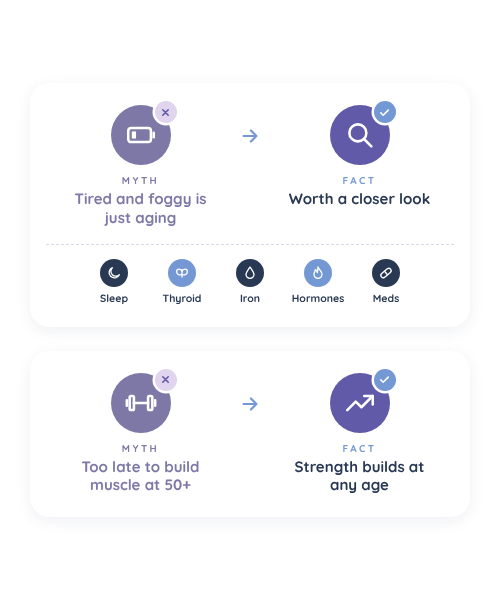
Myth: Feeling exhausted, achy, and mentally foggy is just part of getting older.
While these symptoms are common, they should not automatically be dismissed. Sleep disorders, thyroid conditions, iron deficiency, menopause-related symptoms, medication effects, and other health issues may contribute.
Persistent or worsening symptoms deserve an appropriate assessment.
Myth: It’s too late to build muscle and improve fitness after 50.
Our bodies retain the ability to respond to exercise throughout adulthood.
A meta-analysis involving adults aged 50 to 83 found that progressive resistance training increased lean body mass, with an average gain of approximately 1.1 kg across the included studies (Peterson et al., 2011).
While individual results vary, the evidence is encouraging: becoming stronger remains possible at virtually every stage of adult life.
The Six Foundations of Healthy Aging
There is no single supplement, treatment, or laboratory test that guarantees longevity.
My approach focuses on several interconnected aspects of health that influence how well we age.
1. Muscle Strength, Mobility & Physical Function
Muscle is one of our most valuable assets as we age.
Beyond supporting our appearance and physical strength, skeletal muscle plays an important role in glucose regulation, metabolic health, balance, and physical independence.
Age-related declines in muscle strength and function can eventually contribute to sarcopenia, a condition associated with an increased risk of falls, disability, and loss of independence (Cruz-Jentoft et al., 2019).
Maintaining strength allows us to continue doing everyday activities, participating in sports, travelling, and enjoying an active lifestyle.
I place particular emphasis on:
- Progressive resistance training
- Functional strength and lower-body power
- Balance, stability, and coordination
- Mobility and flexibility
- Cardiovascular fitness
- Adequate nutrition and recovery
The Canadian 24-Hour Movement Guidelines recommend muscle-strengthening activity at least twice weekly and at least 150 minutes of moderate-to-vigorous aerobic activity for adults (Ross et al., 2020).
The goal isn’t simply to exercise more. It’s to preserve the physical capacity to live the life you want.
2. Cardiovascular & Metabolic Health
Cardiovascular disease remains a major health concern for women, and risk factors can change considerably through the menopause transition.
Blood pressure, cholesterol, blood sugar regulation, smoking, physical activity, body composition, and family history all contribute to cardiovascular risk.
Rather than examining a single number in isolation, I consider the broader picture.
This may include reviewing:
- Blood pressure and resting heart rate
- Standard cholesterol and lipid profiles
- Apolipoprotein B (ApoB)
- Lipoprotein(a), or Lp(a)
- Blood glucose and HbA1c
- Relevant inflammatory or metabolic markers
- Personal and family history of cardiovascular disease
Certain advanced lipid markers can provide additional information beyond a routine cholesterol panel.
For example, the Canadian Cardiovascular Society recommends that Lp(a) be measured at least once during adulthood as part of cardiovascular risk assessment.
My aim is to help patients understand their risk factors and identify appropriate preventive measures, including lifestyle strategies and medical referrals when indicated.
3. Bone Health & Osteoporosis Prevention
Bone health deserves attention well before a fracture occurs.
Following menopause, declining estrogen levels can accelerate bone loss, increasing the risk of osteoporosis.
Because osteoporosis often develops without noticeable symptoms, preventive assessment is particularly important.
I consider factors such as:
- Age and menopause status
- Family or personal history of fractures
- Bone density and fracture risk
- Calcium, vitamin D, and protein intake
- Resistance and weight-bearing activity
- Balance and fall prevention
- Medications or medical conditions affecting bone health
Osteoporosis Canada’s 2023 clinical practice guideline recommends progressive resistance training, balance and functional exercises, and meeting nutritional requirements as part of fracture prevention (Morin et al., 2023).
For women over 50, recommended calcium intake is approximately 1,200 mg daily from diet and supplements combined, with food sources prioritized.
When appropriate, I recommend bone density testing and coordinate with patients’ family doctors regarding medical assessment and treatment.
4. Nutrition, Metabolic Health & Body Composition
Our nutritional needs evolve throughout adulthood.
As we age, preserving lean muscle becomes particularly important, especially when managing changes in weight and body composition.
Rather than focusing exclusively on calorie restriction or the number on the scale, I encourage a nutritional approach that supports metabolic health, strength, and long-term well-being.
This often includes:
- Adequate protein distributed throughout the day
- Vegetables, fruit, whole grains, and fibre-rich foods
- Healthy fats, including olive oil, nuts, seeds, and fish
- Sufficient calcium and other essential nutrients
- Attention to alcohol intake and highly processed foods
- Practical strategies that fit individual preferences and lifestyles
Research on Mediterranean-style dietary patterns, including the PREDIMED trial, has demonstrated cardiovascular benefits in adults at elevated cardiovascular risk (Estruch et al., 2018).
Protein requirements may also be higher for certain older or physically active adults. Expert recommendations have suggested approximately 1.0–1.2 grams per kilogram of body weight daily for many healthy adults over 65, with individual adjustments based on health and activity level (Bauer et al., 2013).
Healthy aging nutrition is about nourishing your body to remain strong and capable, not simply eating less.
5. Sleep, Cognitive Health & Emotional Well-Being
Healthy aging involves more than muscles, bones, and blood work.
Sleep, mental health, cognitive function, and social connection all influence long-term well-being.
Insufficient or disrupted sleep can affect concentration, mood, appetite, exercise recovery, and daily functioning.
For women in perimenopause, sleep can be complicated by night sweats, hormonal fluctuations, anxiety, and other overlapping factors.
I work with patients to identify contributing factors and develop realistic strategies to support better sleep.
Cognitive health is another important consideration.
The 2024 Lancet Commission on dementia prevention identified 14 potentially modifiable risk factors and estimated that approximately 45% of dementia cases might theoretically be prevented or delayed by addressing them.
These factors include physical inactivity, elevated LDL cholesterol, hypertension, diabetes, hearing loss, depression, smoking, excessive alcohol use, and social isolation (Livingston et al., 2024).
This estimate is based largely on population-level observational evidence and should not be interpreted as a guarantee of individual prevention.
Nevertheless, many of these same health strategies benefit cardiovascular, metabolic, and overall physical health.
6. Hormonal Health Through Perimenopause & Menopause
For women, longevity and hormonal health are closely connected.
The menopause transition can influence several systems, including cardiovascular and metabolic health, bones, body composition, sleep, and sexual well-being.
Understanding these changes provides an opportunity to address symptoms and reassess long-term health risks.
Depending on your needs, care may include nutrition and lifestyle strategies, appropriate investigations, and discussion of menopausal hormone therapy.
Hormone therapy remains an effective treatment for vasomotor symptoms such as hot flashes and night sweats and can help prevent bone loss in appropriately selected women.
The Menopause Society’s 2022 position statement notes that, for many healthy symptomatic women younger than 60 or within 10 years of menopause onset, the benefit-risk balance can be favourable when there are no contraindications.
However, hormone therapy is not recommended solely to prevent cardiovascular disease, dementia, or aging.
I review individual benefits and risks and coordinate prescribing and medical care within the scope of my naturopathic practice.
The 90-Minute Longevity & Healthspan Assessment
A more comprehensive look at how you’re aging — and what you can do to age well.
For individuals interested in taking a more proactive approach to their long-term health, I offer a dedicated 90-minute, in-person Longevity & Healthspan Assessment.
This appointment looks beyond current symptoms to explore the factors influencing your long-term health, including cardiovascular and metabolic risk, physical function, nutrition, sleep, hormonal health, and lifestyle.
The goal is to help you better understand your current health, establish meaningful baselines, and identify practical strategies for the years ahead.

What Does Your Longevity Assessment Include?
1. Comprehensive Health & Risk Review
A detailed discussion of your personal and family medical history, medications, existing health concerns, and risk factors for conditions such as cardiovascular disease, diabetes, osteoporosis, and cognitive decline.
2. Cardiovascular & Metabolic Assessment
A review of relevant indicators such as blood pressure, resting heart rate, physical measurements, available laboratory results, family history, and metabolic risk factors.
Additional investigations may be recommended when appropriate.
3. Functional Strength, Balance & Mobility
Simple physical performance assessments can provide useful information about strength, mobility, balance, and functional capacity.
Depending on your health and physical abilities, these may include:
- Handgrip strength testing
- Chair-rise or lower-body strength assessments
- Standing balance testing
- Selected mobility and functional movement assessments
These measurements can help establish a baseline that may be revisited over time.
They complement, rather than replace, medical assessment of cardiovascular fitness, frailty, or other health risks.
4. Nutrition, Lifestyle & Recovery
A review of dietary patterns, protein intake, physical activity, resistance training, sleep, stress, and recovery.
For women in midlife and beyond, we also consider relevant hormonal changes, bone health, and menopausal concerns.
5. Laboratory Review & Preventive Health Planning
We review previous blood work and determine whether additional testing would provide meaningful information.
Where appropriate, this may include routine or advanced cardiovascular, metabolic, or nutritional markers.
6. Your Personalized Healthspan Strategy
Together, we establish priorities and discuss practical recommendations suited to your individual goals.
These might include exercise and nutrition changes, sleep support, appropriate laboratory investigations, or coordination with other healthcare providers.

Who Is the Longevity Assessment For?
This appointment may be particularly valuable for:
- Adults in their 40s, 50s, 60s, and beyond who want to take a proactive approach to their health
- Women navigating perimenopause or menopause
- People with a family history of cardiovascular disease, diabetes, osteoporosis, or other chronic conditions
- Individuals interested in maintaining muscle strength, mobility, and independence
- Physically active adults wanting to establish a baseline of functional health
- People who feel generally well but want a more comprehensive understanding of their long-term health risks
You don’t need to feel unwell to start investing in your future health.
Book Your Longevity Assessment
Laboratory testing and follow-up appointments, when recommended, are arranged separately and may involve additional fees.
Going Beyond Routine Blood Work: Understanding Longevity Biomarkers
Routine blood work provides valuable information, but certain additional tests can sometimes help us better understand cardiovascular, metabolic, and nutritional health.
One of my areas of interest is helping patients understand which markers are clinically meaningful and how they may influence preventive care.
Importantly, more testing is not necessarily better.
I select investigations based on your history, risk factors, symptoms, and whether the results are likely to influence your care.
Advanced Cardiovascular Markers
Apolipoprotein B (ApoB)
ApoB provides an estimate of the number of potentially atherosclerosis-causing lipoprotein particles circulating in the blood.
It may be especially informative when traditional cholesterol measurements do not fully reflect an individual’s metabolic or cardiovascular risk.
Lipoprotein(a) — Lp(a)
Lp(a) is a largely inherited cardiovascular risk factor.
Elevated Lp(a) may increase the lifetime risk of atherosclerotic cardiovascular disease and aortic valve stenosis.
Unlike many cholesterol markers, Lp(a) is influenced primarily by genetics and generally does not require frequent repeated testing.
High-Sensitivity C-Reactive Protein (hs-CRP)
Hs-CRP is a nonspecific marker of inflammation.
In selected circumstances, it may provide additional cardiovascular risk information. However, elevated levels can result from many causes, including infection and inflammatory conditions, and must be interpreted accordingly.
Metabolic & Nutritional Markers
Other investigations may include:
- Fasting glucose, fasting insulin, and HbA1c: To assess blood sugar regulation and diabetes risk.
- Standard lipid panel: To assess cholesterol and triglycerides.
- Thyroid function: When symptoms or clinical findings warrant investigation.
- Vitamin B12 and ferritin: When nutritional deficiency or related symptoms are a concern.
- Vitamin D: When an individual’s risk factors or medical circumstances make testing appropriate.
- Omega-3 fatty acid status: Sometimes considered for a specific nutritional question, although it is not an established routine screening test for longevity.
Additional testing may be appropriate in selected cases, but I do not recommend extensive panels simply because they are marketed as longevity investigations.
The value of laboratory testing is not in collecting numbers. It’s in understanding what those results mean and whether they can help guide better health decisions.
Your Personalized Healthy Aging Plan: Care in Four Phases
My approach to healthy aging is structured but flexible.
There is no universal protocol, and not everyone needs the same investigations, treatments, or number of appointments.
Phase 1: Assess & Identify Priorities
We begin with a comprehensive review of your health history, lifestyle, symptoms, physical function, and relevant risk factors.
When indicated, laboratory testing or medical referrals help identify concerns requiring attention.
If you’re experiencing disruptive symptoms such as insomnia, fatigue, or menopausal hot flashes, these may become our immediate priorities.
Phase 2: Strengthen Your Daily Foundations
We focus on practical, sustainable habits that support overall health.
These may involve improvements in nutrition, sleep, movement, stress management, and daily routines.
The goal isn’t to change everything overnight. It’s to establish habits that are both effective and realistic for your life.
Phase 3: Build Strength & Metabolic Resilience
We place greater emphasis on preserving and improving physical function through resistance training, cardiovascular activity, nutrition, and recovery.
When relevant, we also address cardiovascular risk factors, bone health, and metabolic concerns.
Phase 4: Monitor, Adapt & Maintain
Healthy aging is a long-term process.
Where appropriate, we reassess selected laboratory markers, functional measurements, symptoms, and health priorities over time.
As your health and circumstances change, your plan can evolve.
My goal is to give you practical tools and confidence to make informed decisions about your health, rather than creating unnecessary dependence on ongoing testing or appointments.
Supportive Naturopathic Therapies for Healthy Aging
Foundational strategies such as exercise, nutrition, sleep, and preventive healthcare remain central to my approach.
Depending on your health history and needs, additional support may include:
Nutrition Counselling
Individualized guidance for protein intake, metabolic health, body composition, dietary patterns, and nutritional sufficiency.
Targeted Supplements
Supplements may be considered when there is a clinically relevant indication, such as inadequate intake or a documented deficiency.
I review evidence, dosing, and potential interactions with medications before recommending products.
Acupuncture
Acupuncture may be appropriate for selected symptoms, particularly certain pain, musculoskeletal concerns, hot flashes, and mood changes.
It is not an established treatment for slowing biological aging or extending lifespan.
Menopausal Hormone Therapy
For suitable women, hormone therapy can be effective for managing certain menopausal symptoms and preventing bone loss in appropriately selected women.
Vitamin B12 Injections
B12 injections may be appropriate for certain patients with deficiency, impaired absorption, or another clinical indication. They are not a general anti-aging treatment.
Good care is not about recommending everything available. It’s about understanding what is appropriate, useful, and supported by evidence for you.
What Does the Research Say About Healthy Aging?
I believe patients deserve to understand not only what research suggests, but also the limits of what we know.
The following studies and clinical guidelines help inform my approach.
Canadian 24-Hour Movement Guidelines (2020)
Canadian guidelines recommend at least 150 minutes of moderate-to-vigorous aerobic activity weekly, muscle-strengthening exercise at least twice weekly, and sufficient sleep.
They also emphasize reducing sedentary time and incorporating balance activities in older adulthood.
These are population-level recommendations that should be adapted to individual health and physical abilities.
Osteoporosis Canada Clinical Practice Guideline (2023)
The guideline emphasizes resistance training, balance and functional exercises, and appropriate calcium and vitamin D intake to support bone health and reduce fracture risk.
Its recommendations also consider individual fracture risk when determining the need for additional investigations and treatment.
Resistance Training & Muscle Preservation — Peterson et al. (2011)
This meta-analysis found that resistance training increased lean body mass in older adults.
Although the included studies varied in design, exercise intensity, and participant characteristics, the findings support the value of progressive strength training throughout adulthood.
Mediterranean Diet & Cardiovascular Health — PREDIMED (2018)
In adults at high cardiovascular risk, the Mediterranean dietary interventions supplemented with extra-virgin olive oil or nuts were associated with fewer major cardiovascular events than the comparison diet.
The trial’s original publication was withdrawn because of randomization issues. A corrected analysis was published in 2018, with broadly similar findings.
This research supports Mediterranean-style eating patterns but does not imply that any single dietary change guarantees cardiovascular protection.
Menopausal Hormone Therapy — The Menopause Society (2022)
The Menopause Society’s position statement supports individualized hormone therapy for appropriate menopausal indications, particularly management of bothersome symptoms and prevention of bone loss.
Benefits and risks vary according to age, time since menopause, medical history, treatment type, and route of administration.
Hormone therapy should not be prescribed solely as a general anti-aging intervention.
Dementia Prevention — The Lancet Commission (2024)
The Commission identified 14 potentially modifiable dementia risk factors across the lifespan.
Its estimate that approximately 45% of cases might theoretically be prevented or delayed reflects population-level associations and assumptions, not a guarantee that dementia can be prevented in an individual.
Nevertheless, the findings reinforce the importance of cardiovascular health, physical activity, hearing and vision care, and social well-being.
Vitamin D & Chronic Disease Prevention — VITAL Trial (2019)
The VITAL randomized trial did not find that routine vitamin D supplementation significantly reduced major cardiovascular events or invasive cancer in the generally healthy population studied.
Vitamin D remains important for bone health, and supplementation may be appropriate based on age, dietary intake, deficiency risk, and other clinical circumstances.
This is a useful reminder that more supplementation does not automatically mean better health outcomes.
When Symptoms Shouldn’t Be Dismissed as Normal Aging
Although many age-related changes occur gradually, certain symptoms deserve prompt medical assessment.
Persistent fatigue, unexplained weight loss, significant joint swelling, new memory difficulties, or changes in bowel habits should not automatically be attributed to aging or menopause.
Any vaginal bleeding after menopause — defined as bleeding after 12 consecutive months without a period — should be assessed promptly.

When to Seek Emergency Medical Care
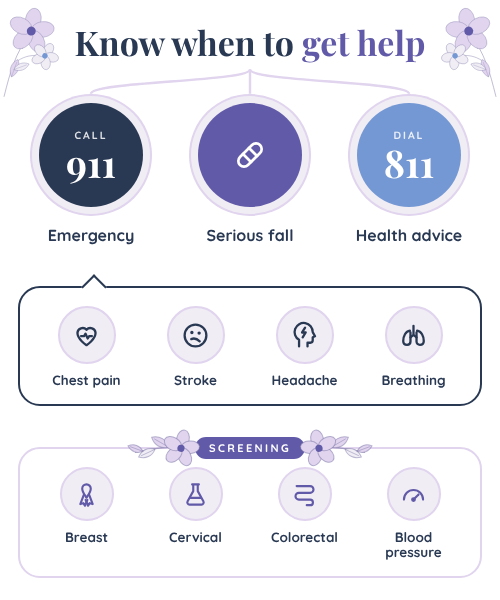
Call 911 for symptoms such as:
- Chest pain or pressure, particularly with shortness of breath, nausea, or sweating
- Signs of stroke, including sudden facial drooping, arm weakness, or difficulty speaking
- Sudden severe headache, acute confusion, or sudden vision loss
- Collapse, severe breathing difficulty, or other potentially life-threatening symptoms
A fall resulting in a suspected fracture, a concerning head injury, or inability to bear weight also warrants urgent evaluation.
For non-emergency health advice in Ontario, Health811 is available by dialling 811.
I encourage patients to stay current with appropriate preventive screening through their family doctor, including breast, cervical, and colorectal screening, blood pressure checks, and other assessments based on age and individual risk.
Naturopathic care works best alongside, not in place of, conventional medical care.

Healthy Aging Is About More Than Preventing Disease
I often remind patients that health is more than simply the absence of illness.
It’s being able to take that trip you’ve been planning, participate in the activities you love, stay active outdoors, and maintain the confidence and independence to enjoy life.
It’s also about having the physical and emotional resilience to continue trying new things as you get older.
Your version of healthy aging may look different from someone else’s, and that’s exactly why care should be individualized.
I believe in taking care of your health without allowing it to become your entire life.
Simply Healthy, Simply Strong reflects my belief that good health should give us the freedom, confidence, and ability to live fully at every stage.
Start Investing in Your Future Health
Healthy aging isn’t about trying to remain 25 forever. It’s about building a stronger, healthier, more resilient version of yourself at every stage of life.
Whether you’re navigating the changes of midlife, looking to improve your cardiovascular and metabolic health, hoping to preserve muscle and bone, or simply wanting to remain active and independent for years to come, a thoughtful plan can help you move forward.
Your future health deserves attention today.

Clinical References & Further Reading
- Bauer, J., Biolo, G., Cederholm, T., et al. (2013). Evidence-based recommendations for optimal dietary protein intake in older people: A position paper from the PROT-AGE Study Group. Journal of the American Medical Directors Association, 14(8), 542–559. DOI
- Cruz-Jentoft, A. J., Bahat, G., Bauer, J., et al. (2019). Sarcopenia: Revised European consensus on definition and diagnosis. Age and Ageing, 48(1), 16–31. DOI
- El Khoudary, S. R., Aggarwal, B., Beckie, T. M., et al. (2020). Menopause transition and cardiovascular disease risk: Implications for timing of early prevention. Circulation, 142(25), e506–e532. DOI
- Estruch, R., Ros, E., Salas-Salvadó, J., et al. (2018). Primary prevention of cardiovascular disease with a Mediterranean diet supplemented with extra-virgin olive oil or nuts. New England Journal of Medicine, 378(25), e34. DOI
- Franceschi, C., Garagnani, P., Parini, P., et al. (2018). Inflammaging: A new immune-metabolic viewpoint for age-related diseases. Nature Reviews Endocrinology, 14(10), 576–590. DOI
- Greendale, G. A., Sternfeld, B., Huang, M., et al. (2019). Changes in body composition and weight during the menopause transition. JCI Insight, 4(5), e124865. DOI
- Livingston, G., Huntley, J., Liu, K. Y., et al. (2024). Dementia prevention, intervention, and care: 2024 report of the Lancet standing Commission. The Lancet, 404(10452), 572–628. DOI
- Manson, J. E., Cook, N. R., Lee, I. M., et al. (2019). Vitamin D supplements and prevention of cancer and cardiovascular disease. New England Journal of Medicine, 380(1), 33–44. DOI
- Menopause Foundation of Canada. (2023). Menopause and Work in Canada. Report
- Morin, S. N., Feldman, S., Funnell, L., et al. (2023). Clinical practice guideline for management of osteoporosis and fracture prevention in Canada: 2023 update. Canadian Medical Association Journal, 195(39), E1333–E1348. DOI
- Peterson, M. D., Sen, A., & Gordon, P. M. (2011). Influence of resistance exercise on lean body mass in aging adults: A meta-analysis. Medicine & Science in Sports & Exercise, 43(2), 249–258. DOI
- Ross, R., Chaput, J. P., Giangregorio, L. M., et al. (2020). Canadian 24-Hour Movement Guidelines for Adults. Applied Physiology, Nutrition, and Metabolism, 45, S57–S102. DOI
- The North American Menopause Society. (2022). The 2022 hormone therapy position statement. Menopause, 29(7), 767–794. DOI
- Canadian Cardiovascular Society. (2021). Guidelines for the Management of Dyslipidemia for the Prevention of Cardiovascular Disease in Adults. Guideline
- Osteoporosis Canada. (2023). Clinical Practice Guideline for Management of Osteoporosis and Fracture Prevention in Canada. Guideline
Clinical author/reviewer: Dr. Lisa Tabrizi, ND, registered with the College of Naturopaths of Ontario.
Last reviewed: November 10 2026
This page is intended for general education and does not replace individualized medical assessment or treatment. Naturopathic care complements conventional healthcare. Seek appropriate medical attention for urgent or concerning symptoms.

I’m Dr. Lisa Tabrizi, a naturopathic doctor practicing since 2011, with a clinical focus on women’s health, perimenopause and menopause, metabolic health, and healthy aging.
My approach combines evidence-informed naturopathic care, thoughtful laboratory assessment, and practical recommendations that fit into everyday life.
I have a particular interest in the connection between hormonal health, muscle strength, cardiovascular and metabolic health, and longevity.
Outside of clinical practice, I enjoy strength training, swimming, cycling, golf, sailing, travel, and staying active outdoors.
These interests reinforce my belief that maintaining our health is ultimately about preserving the ability to do the things we enjoy.
My goal is to help patients understand their health, make informed decisions, and approach the years ahead with confidence.
FAQ
- What is the difference between longevity and healthspan?
- When should I start thinking about healthy aging?
- What does a naturopathic doctor do for longevity?
- Why am I gaining abdominal weight around menopause?
- Is it normal to lose muscle after 40?
- Is brain fog during midlife a sign of dementia?
- How can I prevent osteoporosis after menopause?
- Do I need advanced longevity blood tests?
- Is hormone therapy recommended for longevity?
- What are the best supplements for healthy aging?
- What is included in your Longevity & Healthspan Assessment?
- Can I book a longevity assessment even if I feel healthy?
- Do you offer healthy aging care for men?
- Do I need a referral to book an appointment?
- Where is your Burlington naturopathic clinic located?
Longevity refers to how long we live, while healthspan refers to the number of years we spend in good health. My approach emphasizes preserving physical function, cognitive health, and independence while addressing modifiable long-term health risks.
There is no specific age at which healthy aging care should begin. However, your 40s and 50s are particularly valuable years to review cardiovascular risk, metabolic health, muscle strength, bone health, and menopause-related changes.
I assess your health history, nutrition, physical activity, sleep, stress, and relevant cardiovascular and metabolic risks. Depending on your needs, care may include functional assessments, laboratory investigations, nutrition and exercise guidance, and collaboration with other healthcare providers.
The menopause transition is associated with changes in body-fat distribution and body composition. Sleep, stress, nutrition, physical activity, and changes in muscle mass may also contribute. Strength training, adequate protein, cardiovascular exercise, and an individualized nutritional approach can help support metabolic health.
Some changes in muscle mass and strength occur with age, but significant loss of function is not inevitable. Resistance training and adequate nutrition can help maintain and improve muscle strength throughout adulthood.
Brain fog and word-finding difficulties can occur during perimenopause and may be associated with sleep disturbances, mood symptoms, and hormonal changes. These symptoms do not automatically indicate dementia. However, persistent, worsening, or functionally significant cognitive changes should be medically assessed.
Resistance training, weight-bearing activity, balance exercises, adequate calcium and vitamin D, sufficient protein, and avoiding smoking all contribute to bone health. Some individuals also require medical treatment based on bone density and fracture risk.
Not everyone benefits from extensive testing. Certain markers, such as ApoB and Lp(a), can provide useful cardiovascular risk information, while other investigations are appropriate only when a specific clinical question exists.
The goal is to recommend tests that can meaningfully guide care rather than ordering investigations simply because they are associated with longevity.
Hormone therapy can be effective for certain menopausal symptoms and preventing bone loss in appropriately selected women. However, it is not recommended solely to extend lifespan or prevent cardiovascular disease or dementia.
There is no universal supplement regimen proven to slow aging or extend lifespan. Supplements may be useful for particular deficiencies or clinical indications, but they should complement rather than replace nutrition, exercise, sleep, and preventive healthcare.
The 90-minute assessment includes a comprehensive health history and risk review, selected functional measurements of strength, balance, and mobility, a review of cardiovascular and metabolic health, and a personalized plan for healthy aging.
Laboratory testing may be recommended separately when clinically appropriate.
Yes. You don't need to be experiencing symptoms to benefit from reviewing your health, understanding relevant risk factors, and establishing practical preventive priorities.
Yes. Although much of my work focuses on women in midlife and beyond, I also welcome men interested in cardiovascular and metabolic health, strength, preventive healthcare, and healthy aging.
No referral is required. Many extended health benefit plans include naturopathic care, although coverage varies by plan.
My office is located at 1100 Burloak Drive in Burlington, near the Oakville border and conveniently accessible from the QEW.
Free parking is available on-site.
I welcome patients from Burlington, Oakville, Hamilton, Milton, Mississauga, and neighbouring communities. Virtual consultations are also available throughout Ontario for appropriate services