
If you’re in your late 30s, 40s, or early 50s and feel like your metabolism has suddenly slowed down, you’re not alone.
Many women notice that the strategies that once worked for maintaining their weight and energy no longer work the same way. You may be eating well, exercising, and trying to stay on track, but still noticing more belly fat, lower energy, and more frustration.
The reason is that several things are often changing at once during midlife. Hormones begin to shift, muscle mass naturally declines, daily movement may decrease, and stress and sleep can start having a bigger impact on the body.
Quick Answer
Midlife metabolism changes are often linked to hormonal shifts, muscle loss, lower daily movement, and changes in sleep and stress.
The good news is that your metabolism is not broken. With the right support, you can work with your body instead of against it.
What Is Metabolism?
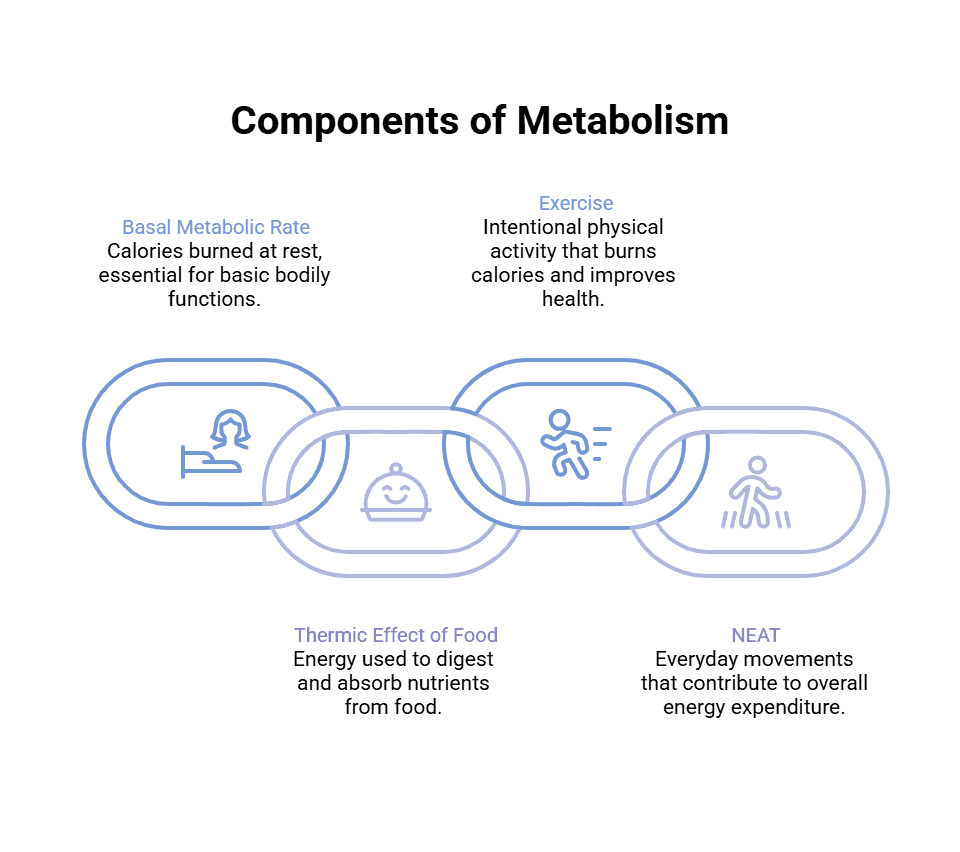
Your metabolism refers to all the processes your body uses to convert food into energy. Your metabolic rate is made up of four main components:
- Basal metabolic rate (BMR) – calories burned at rest
- Thermic effect of food – energy used to digest food
- Exercise – intentional physical activity
- NEAT (Non-Exercise Activity Thermogenesis) – everyday movement like walking, cleaning, or standing
Why Metabolism Changes in Midlife
Many women searching for answers about perimenopause weight gain or metabolism after 40 are surprised to learn that several physiological changes occur simultaneously during midlife.
1. Hormonal Changes During Perimenopause
During perimenopause, estrogen and progesterone begin to fluctuate. Estrogen plays an important role in insulin sensitivity, appetite regulation, fat distribution, and energy balance.
As these hormones change, many women notice that fat starts to collect more around the abdomen, even if their habits have not changed dramatically. Curious to learn more about perimenopause? Check out my blog post: What is Perimenopause? Signs, Symptoms, and What to Expect here
2. Loss of Muscle Mass (Sarcopenia)
Muscle mass tends to decrease with age, and this can become more noticeable in midlife.
Because muscle is metabolically active tissue, having less of it can make it harder to maintain the same metabolic rate. It can also affect strength, body composition, and how your body responds to exercise.
3. Less Daily Movement Than You Think
Even if you still exercise regularly, your overall daily movement may be lower than it used to be.
This kind of everyday movement is often called NEAT, or non-exercise activity thermogenesis. It includes all the little things you do throughout the day that are not formal workouts, but still use energy.
NEAT can include:
- walking during errands
- gardening
- housework
- standing more often instead of sitting
- carrying groceries
These small movements may not seem like much on their own, but together they can make a meaningful difference in how much energy your body uses throughout the day. That’s one reason daily movement plays such an important role in metabolic health.
4. Stress and Sleep Disruption
Midlife often coincides with increased life demands:
- career responsibilities
- family caregiving
- aging parents
- hormonal sleep disturbances
Poor sleep and chronic stress can raise cortisol, a stress hormone that may affect appetite, blood sugar balance, and where the body tends to store fat.
This can contribute to:
- increased appetite
- more weight around the midsection
- blood sugar imbalance
Research also shows that not getting enough sleep is linked to a higher risk of weight gain and metabolic issues.
Why What Used to Work No Longer Works
Many women relied on strategies in their 20s and 30s such as:
- eating very low-calorie diets
- excessive cardio
- skipping meals
- restrictive dieting
But during perimenopause, these approaches can actually slow metabolism further.
Chronic calorie restriction may lead to:
- muscle loss
- metabolic adaptation
- hormonal stress
- increased cravings
The key shift in midlife is supporting metabolism rather than suppressing it.
Want a Step-by-Step Plan to Support Your Metabolism?
If you’re navigating metabolism changes in your 40s or 50s and wondering what to actually eat, how to train, and how to structure your routine, I created a program specifically for this stage of life.
Mastering Your Metabolism is an online course designed to help women:
- understand the metabolic changes of perimenopause
- build strength and protect muscle mass
- structure meals to stabilize blood sugar
- support energy, metabolism, and long-term health
The program walks you through simple, practical strategies you can implement right away.
Learn more here:
Reboot your Metabolism Course
How to Support Your Metabolism After 40
The goal is not extreme dieting.
Instead, focus on building metabolic resilience.
1. Eat Enough Protein
Protein is one of the most helpful nutrients for supporting metabolism in midlife.
It can help by:
- preserving muscle mass
- keeping you fuller for longer
- supporting steadier blood sugar
- slightly increasing the amount of energy your body uses to digest food
Many women feel better when they include protein at every meal instead of having most of it later in the day.
Some simple options include:
Breakfast
• eggs
• Greek yogurt
• protein smoothies
Lunch
• chicken or fish
• tofu or tempeh
• lentils
Dinner
• seafood
• lean meats
• legumes
Getting enough protein can also help support muscle as you age, which is an important part of maintaining metabolic health.
2. Strength Training Is One of the Best Metabolism Boosters
Strength training is one of the best ways to support metabolism in midlife.
It can help by:
- building and preserving muscle mass
- improving insulin sensitivity
- supporting bone density
- increasing the amount of energy your body uses over time
This matters because muscle is metabolically active tissue. The more muscle you maintain, the better supported your metabolism tends to be as you age.
For many women, adding strength training a few times per week can make a meaningful difference in energy, strength, body composition, and long-term metabolic health.

Aim for 2–3 strength training sessions per week that target the major muscle groups.
Over time, gradually increasing resistance is important for continuing to challenge your muscles and support strength gains.
In midlife, strength training becomes one of the most effective tools for preserving muscle and supporting metabolic health.
If you’d like more guidance, in my program, Reboot Your Metabolism, helps women build a strength routine that supports muscle, metabolism, and overall health during perimenopause.
3. Increase Daily Activity
Workouts matter, but so does the movement that happens in between them.
Walking after meals, taking the stairs, gardening, using a standing desk, or getting up for short walking breaks during the day can all make a difference. These small habits add up and can be a meaningful part of supporting metabolic health in midlife.
4. Support Blood Sugar Balance
Blood sugar swings can leave you feeling tired, hungry, and stuck in a cycle of cravings.
That is why blood sugar balance becomes such an important part of supporting metabolism in midlife.
Helpful strategies include:
- building balanced meals with protein, fiber, and healthy fats
- limiting refined carbohydrates and ultra-processed foods
- avoiding long gaps between meals
When blood sugar is more stable, energy tends to feel steadier, cravings may be easier to manage, and metabolism is better supported overall.
5. Prioritize Restorative Sleep
Sleep is one of the most overlooked factors affecting metabolism, especially in midlife.
When sleep is disrupted, it can affect hunger, cravings, energy, and the way the body manages stress and blood sugar.
Aim for 7 to 9 hours of sleep per night whenever possible.
Helpful habits include:
- limiting screens before bed
- reducing evening caffeine and alcohol
- maintaining a consistent sleep schedule
- getting morning sunlight exposure
Even small improvements in sleep can make a meaningful difference in how you feel and how your body functions.
The Bottom Line
Metabolic changes in midlife are common, but that does not mean your body is working against you.
As hormones shift, muscle mass changes, daily movement decreases, and stress and sleep begin to play a bigger role, it often becomes necessary to adjust the strategies that once worked.
The good news is that there are supportive, realistic ways to work with your body during this stage of life.
Focus on:
- strength training
- eating enough protein
- moving more throughout the day
- balanced nutrition
- restorative sleep
These habits can help support energy, strength, and metabolic health in midlife and beyond.
Ready to Support Your Metabolism in Midlife?
Understanding what is changing in your body is an important first step. The next step is knowing how to put the right strategies into practice in a way that feels realistic and sustainable.
In my online program Mastering Your Metabolism, I guide women through:
- how metabolism changes during perimenopause
- how much protein your body actually needs
- how to structure meals for energy and fat loss
- how to build strength and preserve muscle
If you want a clear, practical roadmap for navigating metabolism in midlife, you can learn more here:
Click here to Explore Reboot your Metabolism Online program
Simply Healthy. Simply Strong.
References
- Frank A, Brown LM, Clegg DJ. The role of hypothalamic estrogen receptors in metabolic regulation. Front Neuroendocrinol. 2014 Oct;35(4):550-7. doi: 10.1016/j.yfrne.2014.05.002. Epub 2014 May 29. PMID: 24882636; PMCID: PMC4174989.
- Alfonso J Cruz-Jentoft, et al. Writing Group for the European Working Group on Sarcopenia in Older People 2 (EWGSOP2), and the Extended Group for EWGSOP2 , Sarcopenia: revised European consensus on definition and diagnosis, Age and Ageing, Volume 48, Issue 1, January 2019, Pages 16–31, https://doi.org/10.1093/ageing/afy169
- Levine JA. Non-exercise activity thermogenesis. Proc Nutr Soc. 2003 Aug;62(3):667-79. doi: 10.1079/PNS2003281. PMID: 14692603..
- Spiegel K, et al. Sleep loss: a novel risk factor for insulin resistance and Type 2 diabetes. J Appl Physiol (1985). 2005 Nov;99(5):2008-19. doi: 10.1152/japplphysiol.00660.2005. PMID: 16227462.
Deutz NE, et al. Protein intake and exercise for optimal muscle function with aging: recommendations from the ESPEN Expert Group. Clin Nutr. 2014 Dec;33(6):929-36. doi: 10.1016/j.clnu.2014.04.007. Epub 2014 Apr 24. PMID: 24814383; PMCID: PMC4208946.