You’re doing everything right.
Walking, cycling, yoga, staying active. You’ve always moved your body and you’re proud of that. But lately, something feels off. You’re softer in places you weren’t before. Recovery takes longer than it used to. Energy is lower. And the scale doesn’t respond the same way it once did, even when nothing about your diet has changed. It’s not your effort that’s the problem.
It’s that your body’s needs have shifted — and most women are never told this.
In perimenopause, the most powerful thing you can do for your metabolism, your bones, your mood, your sleep, and your long-term health is this:
Pick up the weights.
Here’s why.
What’s Happening to Your Muscles in Midlife
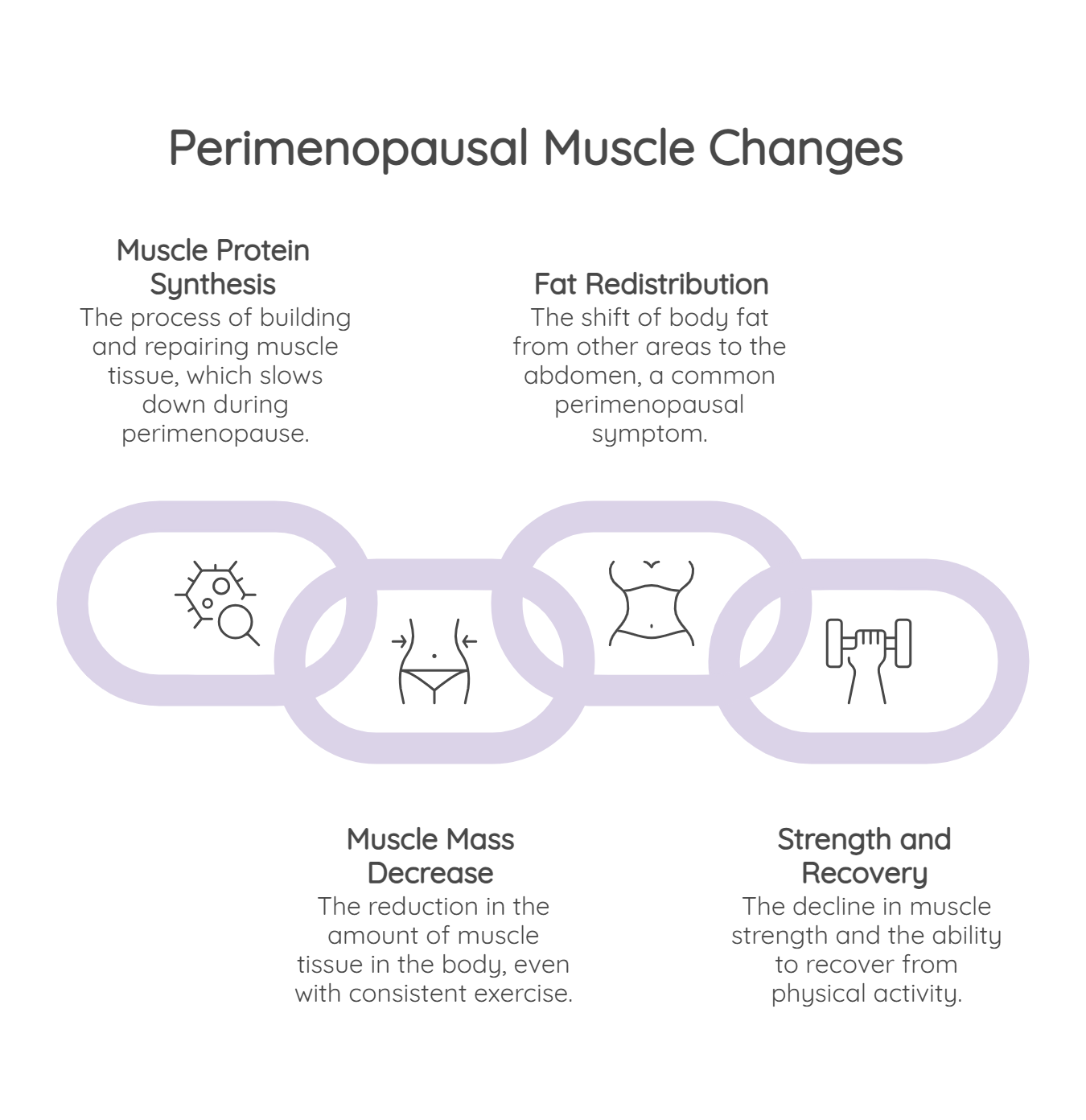
Estrogen does far more than regulate your cycle. It plays a direct role in muscle protein synthesis — the process by which your body builds and repairs muscle tissue.
As estrogen begins to fluctuate and decline in perimenopause:
- Muscle protein synthesis slows
- Muscle mass decreases — even if you’re still exercising the same way
- Fat begins to redistribute, particularly toward the abdomen
- Strength and recovery capacity gradually decline
This is called sarcopenia — age-related muscle loss — and it accelerates significantly during the perimenopausal years.
Without targeted intervention, women can lose 3–8% of muscle mass per decade from their 30s onward. In perimenopause, that process speeds up.
Less muscle doesn’t just mean less strength. It means a slower metabolism, more fatigue, more vulnerability in the joints, and a higher long-term risk of falls and fractures.
Why This Matters Beyond How You Look
Muscle is metabolically active tissue. It burns calories even at rest — meaning the more muscle you carry, the higher your resting metabolic rate. Lose muscle, and your metabolism slows, even if you’re eating and moving the same as before.
But the benefits of preserving muscle go well beyond the scale:
- Muscle protects your joints — it absorbs force and reduces impact on cartilage
- Muscle builds and maintains bone density — weight-bearing load stimulates bone remodelling
- Muscle improves insulin sensitivity — helping regulate blood sugar more effectively
- Muscle is one of the strongest predictors of healthy aging and longevity
- Muscle supports cardiovascular health — reducing risk of metabolic syndrome
In midlife, preserving muscle isn’t about aesthetics. It’s about function. Independence. Vitality for the decades ahead.
Why Cardio Alone Isn’t Enough Anymore
In your 20s and 30s, cardio was often enough to maintain your weight, your energy, and your shape. In perimenopause, that equation changes.
Here’s what cardio doesn’t do:
- It doesn’t build or preserve muscle
- It doesn’t address the sarcopenia problem
- In excess, it can elevate cortisol — the stress hormone — which further accelerates muscle breakdown and disrupts sleep
High-intensity cardio without adequate recovery can actually worsen fatigue, spike inflammation, and make the hormonal picture more complicated — not less.
Strength training, on the other hand:
- Builds and preserves lean muscle mass
- Improves bone mineral density
- Supports insulin sensitivity and blood sugar regulation
- Has been shown to reduce cortisol over time with proper programming
- Improves mood, reduces anxiety, and supports better sleep
This doesn’t mean giving up cardio. It means rebalancing the equation.
What the Evidence Says
Strength training 2–3 times per week has been shown in research to:
- Significantly slow and in some cases reverse age-related muscle loss
- Improve bone mineral density — even in postmenopausal women
- Reduce visceral (abdominal) fat more effectively than aerobic exercise alone
- Improve insulin sensitivity and blood sugar regulation
- Reduce symptoms of depression and anxiety
- Improve sleep quality and duration
This is not a fringe wellness trend. It is some of the most robust evidence we have in midlife women’s health.
How to Start (Without Feeling Overwhelmed)
You do not need to become a powerlifter. You do not need to spend hours in the gym. You need enough load, often enough, to send your muscles the signal to adapt.
A place to begin:
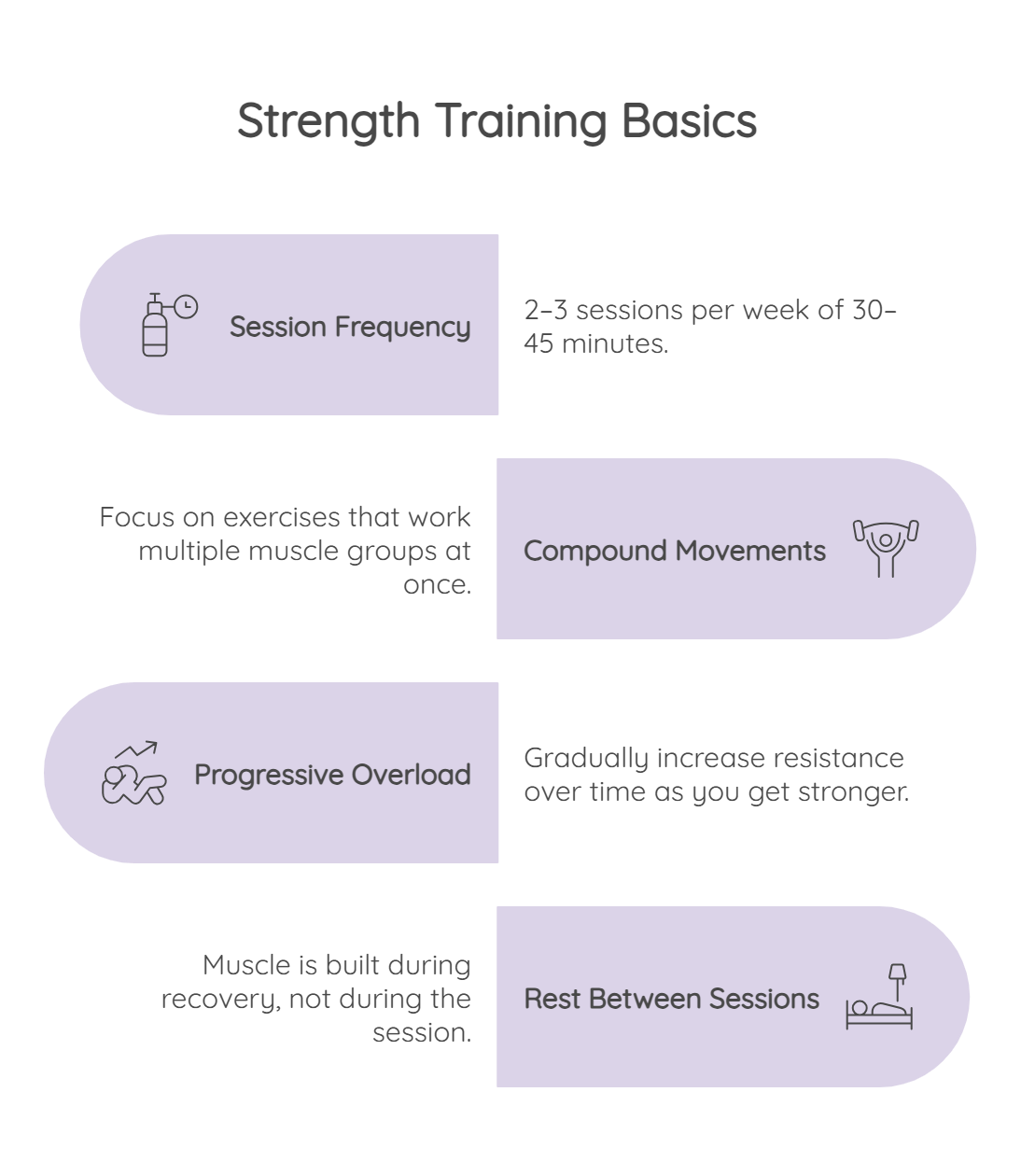
- 2–3 sessions per week of 30–45 minutes
- Focus on compound movements: squats, deadlifts, rows, hinges, push variations — exercises that work multiple muscle groups at once
- Progressive overload: gradually increase resistance over time as you get stronger
- Rest between sessions: muscle is built during recovery, not during the session
Protein is non-negotiable. Most women significantly under-eat protein. Research supports 1.6–2g of protein per kilogram of body weight for active midlife women — significantly more than most are consuming. Protein provides the building blocks your muscles need to respond to training.
What to Pair With It
Strength training works best as part of a bigger picture:
- Adequate sleep — muscle repair happens overnight. Disrupted sleep undermines recovery.
- Blood sugar stability — erratic blood sugar increases cortisol and impairs muscle protein synthesis
- Hormonal support — how well your body responds to training is influenced by your hormonal status, thyroid function, vitamin D, and iron levels
This is where naturopathic support matters. Understanding the full picture of what’s happening in your body allows us to build a training and recovery strategy that actually works — not one that leaves you more exhausted.
The Bottom Line
If there is one recommendation I give to almost every woman in my practice who is in her 40s or 50s, it is this:
Start strength training. Keep going.
Not because of how you’ll look. Because of how you’ll feel — and how you’ll function — for the next 30 years. Your body is not betraying you. It’s asking for a different kind of support.
If you’re in Burlington and want to understand how to build a plan that works with your hormones, your recovery, and your health goals, book an appointment and we’ll build it together.
Simply Healthy. Simply Strong.