There are no warning signs.
No pain. No obvious symptoms. Nothing that tells you something is changing.
Bone loss in perimenopause is entirely silent — until it becomes a problem.
If you’re in your 40s, your bones are already in one of the most critical windows of your life. The decisions you make now — what you eat, how you move, what you supplement, how you support your hormones — will shape your skeletal health for the next three to four decades.
Here’s what you need to know.
How Bone Actually Works
Most people think of bone as fixed and unchanging — like concrete. It isn’t.
Bone is living tissue, constantly being broken down and rebuilt in a process called remodelling.
Two key cell types run this process:
• Osteoclasts — break down old or damaged bone
• Osteoblasts — build new bone tissue
In your 20s, building outpaces breakdown — you’re adding to your peak bone mass. From your 30s, the process roughly balances out. In perimenopause, that balance tips.
Osteoclast activity accelerates. Osteoblasts can’t keep up. Net result: you lose more bone than you build.
The Perimenopause Bone Loss Window
Estrogen is the primary regulator of osteoclast activity. Without its moderating influence, bone breakdown accelerates significantly.
During the perimenopausal and early menopausal years, women can lose 1–3% of bone density per year — sometimes more. Over the span of a decade, that adds up.
This is not a slow, gradual decline. The first five years after menopause represent the most rapid phase of bone loss a woman’s body experiences.
And the setup for that loss begins in perimenopause — often years before the final period.
This is why waiting until menopause to think about bone health means missing the most important intervention window.
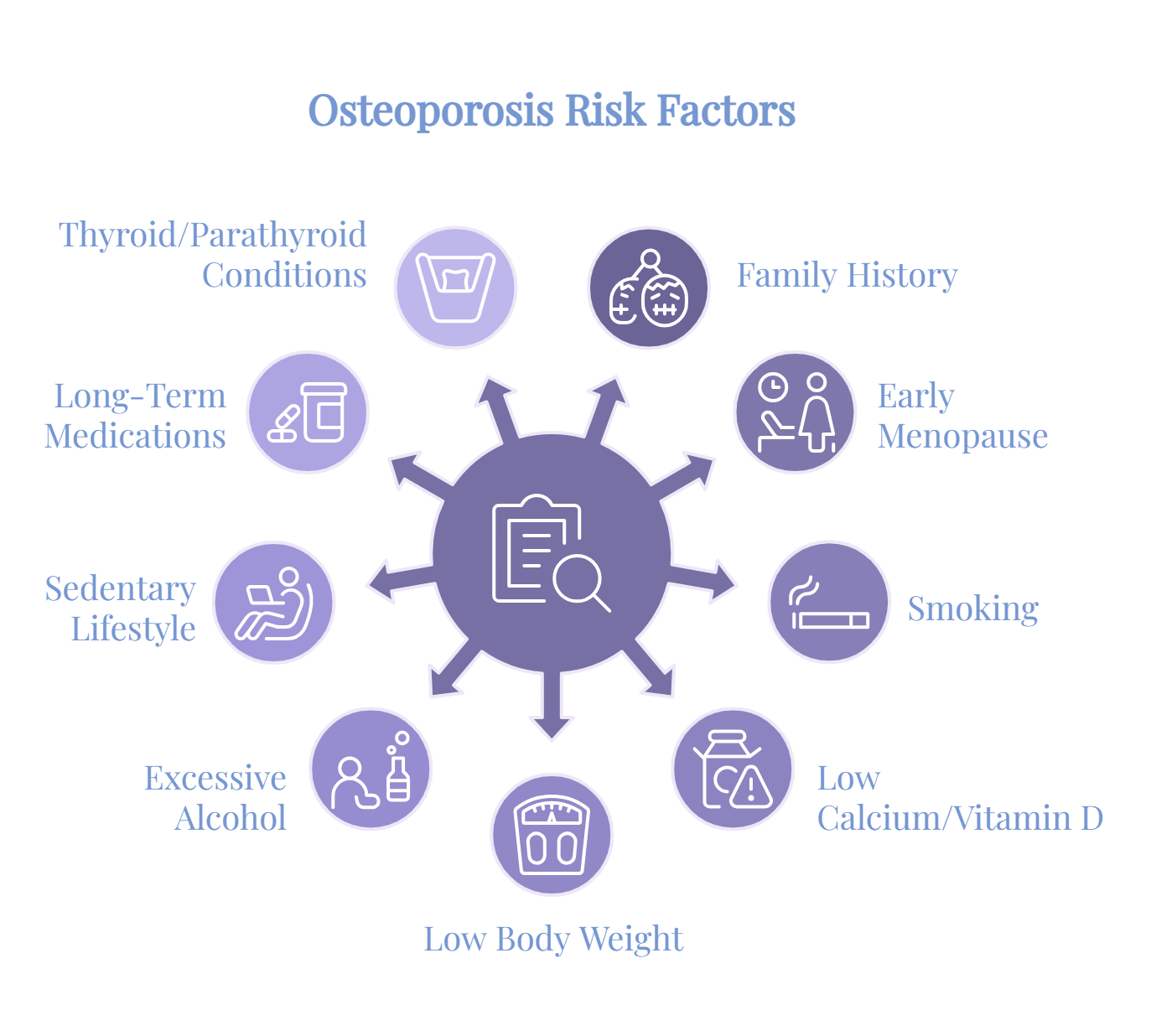
What Increases Your Risk?
Some risk factors are within your control. Others simply inform your picture:
• Family history of osteoporosis or low-trauma fracture
• Early perimenopause or premature menopause
• Smoking — directly accelerates bone loss
• Low lifetime calcium and vitamin D intake
• Low body weight or history of disordered eating
• Excessive alcohol consumption
• Sedentary lifestyle, particularly low weight-bearing activity
• Long-term use of certain medications — corticosteroids, some antidepressants, proton pump inhibitors
• History of thyroid or parathyroid conditions
Understanding your risk factors lets us be proactive — not reactive.
How Do You Know Where You Stand?
Bone loss is asymptomatic. The only way to know your bone density is to measure it.
DEXA Scan
The gold standard for measuring bone mineral density. Canadian guidelines suggest screening beginning at age 65 for most women — but if you have risk factors, earlier assessment is clinically appropriate and worth discussing.
Lab Work
Several markers give us important context:
• Vitamin D — essential for calcium absorption and bone mineralization; deficiency is extremely common in Canada
• Calcium — dietary and serum levels
• Parathyroid hormone — regulates calcium balance
• Thyroid function — thyroid hormones directly influence bone turnover
• Estrogen and hormonal status — the hormonal picture matters
A thorough assessment tells us where you are — and what to do about it.
What You Can Do Right Now
1. Strength Train
The single most evidence-backed intervention for bone health is weight-bearing exercise. Mechanical load on the skeleton directly stimulates osteoblast activity — signalling the body to build bone.
Strength training 2–3 times per week has been shown to preserve and in some cases improve bone mineral density, even in postmenopausal women. This is not optional in midlife. It is foundational.
2. Prioritize Calcium Through Food First
Dietary calcium remains the most bioavailable source. Aim for calcium-rich foods throughout the day:
• Dairy — milk, yogurt, cheese
• Leafy greens — bok choy, kale, broccoli
• Canned salmon and sardines with bones
• Fortified plant milks and foods
Supplemental calcium can fill gaps where dietary intake is insufficient — but food first is always the priority.
3. Optimize Vitamin D
Vitamin D is essential for calcium absorption. Without adequate vitamin D, dietary calcium cannot be properly utilized by bone tissue. Most Canadians are deficient from fall through spring.
Testing is the most reliable way to know your level — and dose accordingly.
4. Don’t Forget Magnesium and Vitamin K2
Magnesium works synergistically with calcium and vitamin D in bone mineralization. Many women are deficient.
Vitamin K2 directs calcium into bones — and away from arteries. It’s an underappreciated but important piece of the bone health equation, particularly for midlife women.
5. Reduce the Inflammatory Load
Chronic inflammation drives osteoclast activity — accelerating bone breakdown. Supporting gut health, managing stress, optimizing sleep, and reducing processed food intake all contribute to a lower inflammatory state. These are not separate issues.

The Bottom Line
Osteoporosis is not inevitable. It is largely preventable — especially when we start early.
Your 40s are not the beginning of the end for your bones. They are the window in which proactive action makes the most difference.
Perimenopause is a signal to pay attention. Not with fear — but with intention.
If you’re in the Burlington area and want a comprehensive assessment of your bone health risk — including lab work, hormonal picture, and a personalized plan — book an appointment and let’s look at the full picture together.
Simply Healthy. Simply Strong.
References
1. Eastell R, et al. Pharmacological management of osteoporosis in postmenopausal women. J Clin Endocrinol Metab. 2019;104(5):1595–1622.
2. Cauley JA. Estrogen and bone health in women. Steroids. 2015;99(Pt A):11–15.
3. Weaver CM, et al. Calcium plus vitamin D supplementation and risk of fractures. Osteoporos Int. 2016;27(1):367–376.
4. Hamidi MS, et al. Vitamin D and bone health. J Am Acad Orthop Surg. 2012;20(6):362–369.
5. Lieben L, et al. Extracellular calcium and bone turnover. J Bone Miner Res. 2013;28(1):3–18.
6. Balachandran AT, et al. Effects of resistance training on bone density in perimenopause. J Bone Miner Res. 2022;37(5):880–892.
7. Osteoporosis Canada. Calcium and Vitamin D: Their role in bone health. Toronto: Osteoporosis Canada; 2023.