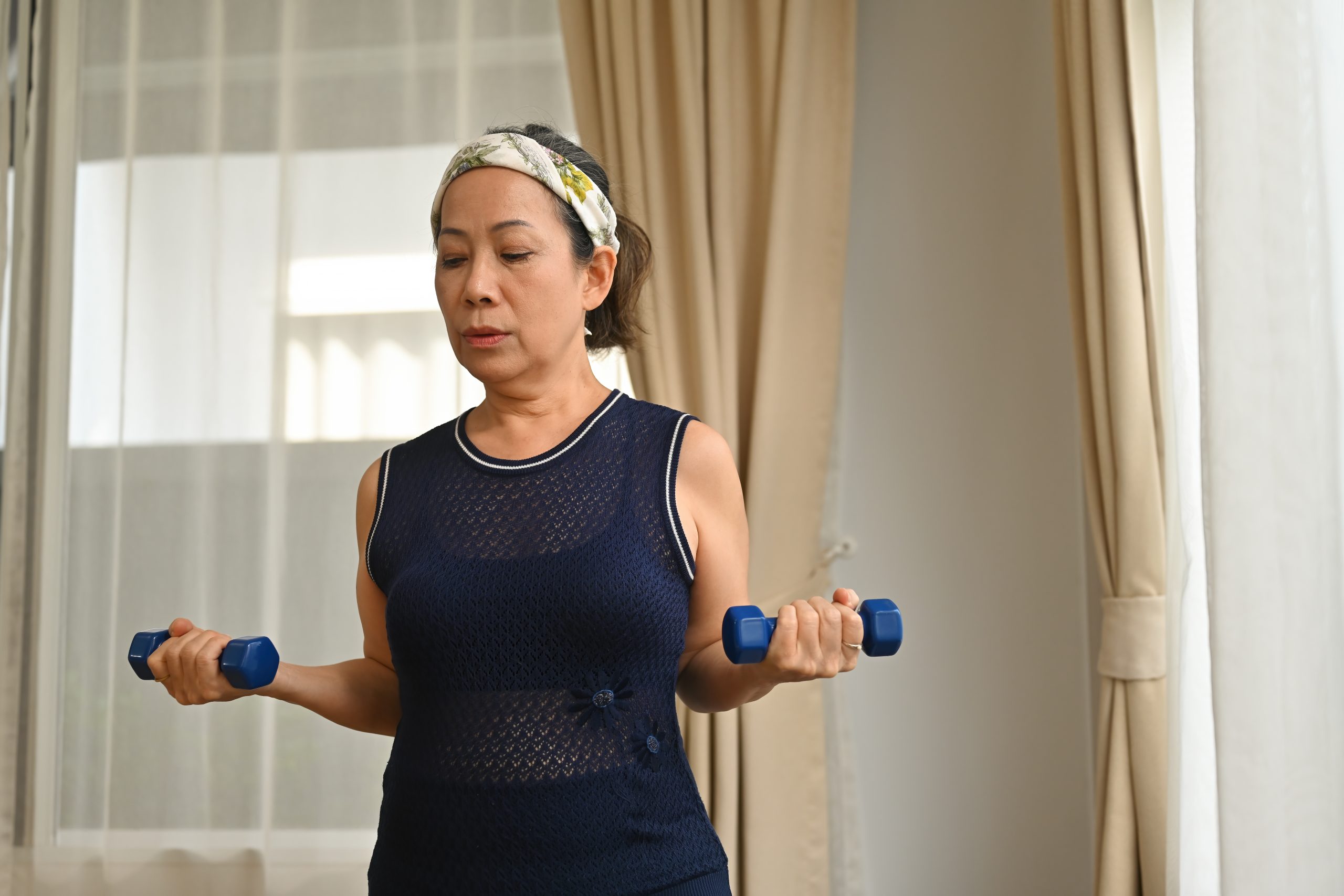
You are walking more than ever and eating carefully, yet stairs feel harder and your arms look softer than they did five years ago. Many women notice this a few years after their last period and assume it is simply part of getting older, something to accept rather than work on.
Muscle loss after menopause is common, but it is not a fixed sentence. In this post we explain why estrogen matters for muscle, how much strength work Canadian guidelines suggest, where protein fits in on your plate, and how to make a realistic plan that works with your joints, energy and a busy schedule.
Why Muscle Loss Speeds Up After Menopause
Everyone loses some muscle with age, a process called sarcopenia when it becomes significant. Research on estrogen and the musculoskeletal system notes that in women, age-related weakness is compounded by the loss of estrogen.
- Lower strength makes stairs, gardening and lifting grandchildren harder.
- Less muscle leaves less tissue to help manage blood sugar.
- Weaker muscles pull less on bone, which matters for bone density.
Muscle is also a big part of why energy needs shift with age. We explore that side in how your metabolism changes in midlife.
How Much Strength Training You Actually Need
The Canadian 24-Hour Movement Guidelines recommend muscle-strengthening activities using major muscle groups at least twice a week, plus 150 minutes of moderate to vigorous aerobic activity. Adults 65 and over are also encouraged to add activities that challenge balance.
That does not have to mean hours at a gym. In the LIFTMOR trial, postmenopausal women did two 30-minute supervised sessions a week and improved physical function more than the control group.
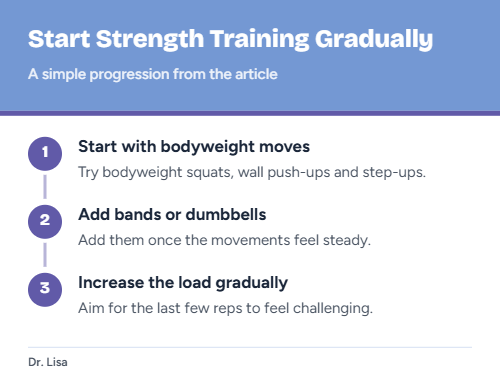
- Start with bodyweight squats, wall push-ups and step-ups.
- Add bands or dumbbells once the movements feel steady.
- Increase the load gradually so the last few reps feel challenging.
For a step-by-step start, read our guide to lifting weights in your 40s.
Protein: The Other Half of the Equation
Muscle needs building blocks. The PROT-AGE research group suggests adults over 65 aim for at least 1.0 to 1.2 g of protein per kilogram of body weight daily, and more for those who exercise regularly.
Example: A woman who weighs 70 kg would aim for roughly 70 to 84 g of protein a day by that measure. Spreading it across meals, such as eggs at breakfast, lentils or chicken at lunch and fish at dinner, is easier than catching up at night.
Our post on eating too little of one key nutrient explains why breakfast and lunch are often where protein falls short. A few small swaps at those meals usually close the gap.
Building a Plan That Fits Your Life
Strength work is easier to keep up when it fits around joint comfort, sleep and energy. We look at the whole picture, including lab work, nutrition and whether menopausal hormone therapy support is something you want to discuss.
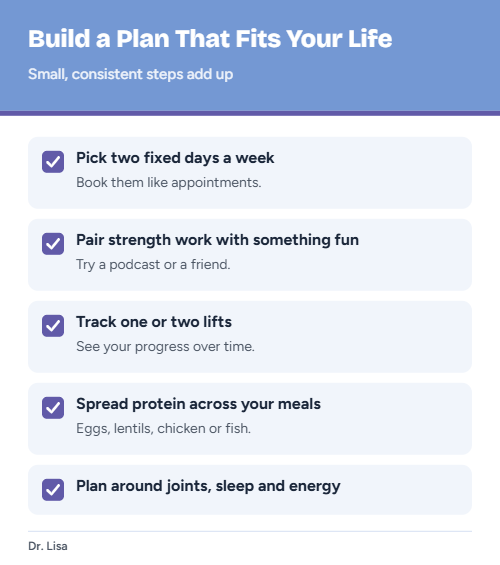
- Pick two fixed days a week and book them like appointments.
- Pair strength work with something you enjoy, like a podcast or a friend.
- Track one or two lifts so you can see your progress.
The Bottom Line
Muscle loss after menopause is common, but it is not inevitable in the way many women are told. Falling estrogen speeds it up, while regular strength training, enough protein spread through the day and steady daily movement help slow it down. Small, consistent steps add up, and it is never too late to start. Your muscles support your bones, your blood sugar and your independence for years to come. If you want a plan built around your body and schedule, book your initial visit online, and talk to your ND about whether this is right for you.
Frequently Asked Questions
Is it safe to start lifting weights in my 60s?
For most people, yes, with a gradual start. The LIFTMOR trial found supervised strength training in postmenopausal women with low bone mass had high adherence and only minor side effects. If you have heart, joint or bone concerns, check with your health care provider first and consider starting with a qualified trainer.
Do I need protein powder to maintain muscle?
No, not necessarily. Most women can meet their protein needs with food such as eggs, fish, dairy, beans, lentils and tofu, which Canada’s Food Guide lists as protein foods. A powder can be a convenient top-up on busy days, but it works well as an addition to meals rather than a replacement.
Does walking count as strength training?
Not on its own. Walking is great for your heart and mood, but Canada’s movement guidelines list aerobic activity and muscle strengthening as separate weekly goals. Osteoporosis Canada also says walking should be in addition to, not instead of, resistance training, so aim for both each week.