
You are standing on a patio in Burlington in the middle of July. The sun has been down for an hour. Everyone else is comfortable. And then it starts, that unmistakable rise from your chest into your neck and face, the flush, the sweat, the sudden urgent need to be somewhere cold.
If you have spent the last few summers wondering why your hot flashes have turned relentless the moment the weather turns, you are not imagining it. And you are not simply less tolerant of heat than you used to be.
There is a specific physiological reason summer amplifies hot flashes, and once you understand it, a lot of the advice you have been given starts to make more sense. Some of it will also start to look like a waste of your time.
In this article we will walk through what a hot flash actually is, why ambient heat changes the math, the difference between cooling your skin and cooling your core (this distinction matters more than almost anything else), and where nutrition, herbal medicine, acupuncture, and hormone therapy fit into the picture.
A Hot Flash Is a Thermoregulatory Event, Not a Heat Event
This is the reframe that changes everything.
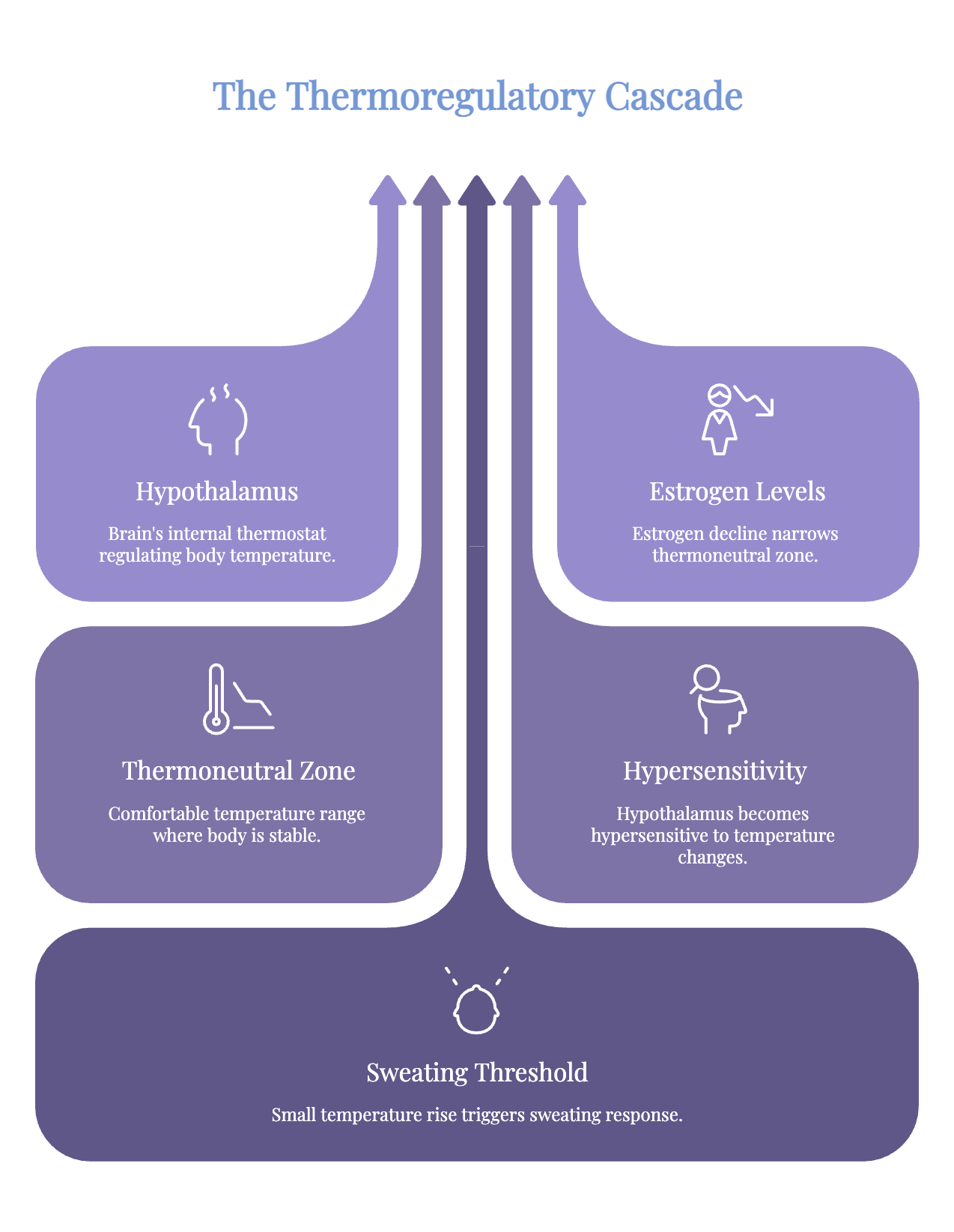
Your brain keeps your core body temperature within a very tight range. The hypothalamus, a small structure deep in the brain, acts as your internal thermostat. Between the point where you start to shiver and the point where you start to sweat sits a comfortable middle zone. Researchers call it the thermoneutral zone. Inside that zone, your body does nothing dramatic. You simply feel fine.
In women with regular estrogen levels, that zone is fairly wide. Your core temperature can drift up or down by a degree or more before your body does anything about it.
As estrogen declines through perimenopause, the hypothalamus becomes more reactive. Research suggests the thermoneutral zone narrows dramatically, in some cases to less than half a degree Celsius. The thermostat has not broken. It has become hypersensitive.
Now a very small rise in core temperature, the kind that used to pass unnoticed, crosses the sweating threshold. Your body responds the way it would if you were dangerously overheated. Blood vessels near the skin dilate rapidly, which produces the flush. Sweat glands fire, which produces the drenching. Your heart rate climbs. Then, minutes later, all that evaporative cooling overshoots and you are left cold and clammy.
A hot flash is not your body reacting to the room. It is your body reacting to a tiny internal temperature shift with a response sized for an emergency.
Why July Stacks the Deck Against You
Once you understand the narrowed zone, summer makes obvious sense.
Ambient heat raises your core temperature before anything else happens. On a 30 degree afternoon, you are already sitting closer to that narrowed threshold than you were in February. Everything you do next, walking to the car, drinking a coffee, feeling stressed, has less room to work with before it tips you over.
Then Southern Ontario adds humidity. Sweating only cools you when the sweat evaporates. When the air is already saturated, evaporation slows, so the sweat sits on your skin without doing its job. Your body sweats harder to compensate. You get the misery of the flash without much of the relief.
Summer also concentrates the specific triggers that provoke flashes:
- Alcohol on patios. Alcohol dilates blood vessels and raises skin temperature almost immediately. A glass of wine in the sun is a near perfect trigger.
- Iced coffee later in the day. Caffeine is a vasomotor stimulant regardless of the temperature of the drink.
- Dehydration. Lower blood volume means less efficient thermoregulation, so your core temperature climbs faster.
- Hot, spicy summer food. Capsaicin directly activates the same heat sensing receptors involved in the flush response.
- Broken sleep. Poor sleep raises next day sympathetic nervous system activity, which lowers your flash threshold further.
- Stress and rushed schedules. Sympathetic arousal narrows the thermoneutral zone even more. This is why flashes often arrive during a difficult conversation rather than during a walk.
None of these are moral failings. They are simply inputs, and inputs can be adjusted.
Cooling Your Skin Versus Cooling Your Core
Here is where most advice goes wrong. Fanning your face feels good. It does very little to your core temperature, which is the variable your hypothalamus is actually monitoring.
If you want to influence the system, you want to move heat out of your core.
What actually cools the core:
- Cool the glabrous skin. The palms of your hands, the soles of your feet, and your face have dense networks of specialized blood vessels that dump heat efficiently. Running cool (not ice cold) water over your wrists and palms moves more heat than fanning your neck. Ice cold water is counterproductive because it constricts those vessels and shuts the pathway down.
- Sip cold water steadily. Cold fluid absorbs heat internally and supports blood volume at the same time. Keep a bottle within reach rather than drinking a large amount at once.
- Pre-cool before you get hot. A cool shower before a walk, before bed, or before a stressful meeting buys you a wider margin.
- Use moving air, not just cold air. A fan aids evaporation. On humid days this matters more than the temperature setting.
- Dress in breathable layers. Merino wool, bamboo, and linen manage moisture far better than polyester. Layers let you shed heat in seconds rather than enduring the whole flash.
What mostly cools skin (comfortable, but not corrective): ice packs on the back of the neck, cold cloths on the forehead, and standing in front of the freezer. Use them for comfort. Do not expect them to reduce how often flashes happen.
The Daily Habits That Reduce Flash Frequency
Comfort measures manage flashes in the moment. These reduce how often they arrive.
Hydration and electrolytes. Water alone is not always enough in July, particularly if you are sweating through the night as well as the day. Adequate sodium, potassium, and magnesium support blood volume and vascular tone. If you are active outdoors, this matters even more.
Alcohol, examined honestly. You do not have to give up your summer entirely. It helps to know that alcohol frequently triggers a flash within thirty minutes and disrupts the second half of your night. Many women find that shifting from three drinks to one, and drinking with food rather than in the sun, changes their week substantially.
Caffeine timing. Caffeine has a half life of rEoughly five to six hours. A two o’clock iced latte is still meaningfully present in your system at bedtime, which is exactly when you need your thermoregulatory system to settle.
Blood sugar stability. A blood sugar drop triggers an adrenaline release, and adrenaline lowers your flash threshold. Meals built around protein and fibre rather than carbohydrate alone flatten those swings. Our nutrition resources offer practical starting points.
Paced breathing. Slow, diaphragmatic breathing at roughly six breaths per minute, practiced for fifteen minutes twice daily, has been studied specifically for vasomotor symptoms. It shifts you out of sympathetic dominance and effectively widens your operating range. It costs nothing and works better than most things that cost money. If you want a structured place to begin, our post on finding your daily dose of zen is a good entry point.
Movement, at the right intensity. Regular aerobic exercise improves thermoregulatory efficiency over time. Exercising in the peak heat of the day does not. Move early, move late, or move indoors.

Where Herbs, Supplements, and Hormone Therapy Fit
This is the part where we want to be plain with you.
Natural does not mean risk free, and more does not mean better. A cupboard full of supplements is not a treatment plan. It is usually a sign that nobody has assessed the whole picture.
Herbal medicine has a real role. Botanicals studied for vasomotor symptoms include black cohosh, sage, and rhubarb extract, among others. They vary widely in evidence quality, and several interact with medications or are inappropriate with certain health histories, including a personal history of hormone sensitive cancer or liver conditions. They should be selected for you, at a therapeutic dose, with your full history in view.
Acupuncture is well tolerated and has been studied for hot flash frequency and severity, with the added benefit of supporting sleep and stress resilience at the same time. For women who cannot or prefer not to use hormone therapy, it is often a reasonable place to start. You can learn more about acupuncture in Burlington and how we use it within a broader plan.
Hormone therapy remains the most effective treatment available for moderate to severe vasomotor symptoms. It is not a default, and it is not right for everyone, but it also should not be ruled out on the basis of headlines from twenty years ago. If your summer is being governed by hot flashes, this deserves a serious, individualized conversation with a prescriber, and we are glad to help you prepare for that conversation with clear information and appropriate testing.
The point is not natural versus conventional. The point is what is right for your body, your history, and your life.
When to Get Assessed Promptly
Most hot flashes are exactly what they appear to be. Some are not. Please book an assessment sooner rather than later if you notice:
- Flushing accompanied by significant heart palpitations, tremor, or unintended weight loss
- Drenching night sweats with fever, or with lumps, bruising, or persistent illness
- Any vaginal bleeding after twelve consecutive months without a period
- Symptoms that appeared abruptly rather than gradually
- Hot flashes that began before age forty
Thyroid conditions, certain medications, and a small number of other diagnoses can mimic vasomotor symptoms. Nothing about your experience should be dismissed, and nothing should be assumed either.
The Bottom Line
Your hot flashes feel worse in summer because ambient heat pushes your core temperature closer to a threshold that estrogen decline has already narrowed. That is a mechanism, not a character flaw.
The things that help most are the things that address the mechanism. Cool your core rather than only your skin. Stabilize your blood sugar. Look honestly at alcohol, caffeine, hydration, and sleep. Practice paced breathing. And when lifestyle is not enough, get a properly individualized plan rather than a shelf of supplements.
You deserve a summer you can actually be present for. Patios, trails, cottage weekends, and long evenings with people you love. Good health is what makes that possible, and that is the whole point of this work.
If hot flashes are running your summer, we would like to help. Book an appointment for menopause and perimenopause support in Burlington and let’s build a plan around your body, your history, and the summer you want to have.
Frequently Asked Questions
Why do my hot flashes get worse in hot weather if a hot flash isn’t caused by heat?
Ambient heat raises your core body temperature. Because estrogen decline has narrowed the temperature range your brain tolerates, you begin each summer day already sitting closer to the threshold that triggers the flush and sweat response. The heat does not cause the flash, but it removes your buffer.
Does drinking ice water stop a hot flash?
Sipping cold water helps, because it absorbs internal heat and supports blood volume. What does not help is plunging your hands into ice cold water, which constricts the very blood vessels your body uses to release heat. Cool water on the palms and wrists is more effective than ice.
Do I have to choose between natural options and hormone therapy?
No. Hormone therapy is the most effective treatment for moderate to severe hot flashes, and it can be used alongside nutrition, herbal medicine, acupuncture, and lifestyle changes. Some women do very well without it. The right answer depends on your symptoms, your medical history, and your preferences, which is exactly what a thorough assessment is for.
Curious about how we approach women’s health? Learn more about our naturopathic services in Burlington, or read about Dr. Lisa’s background and approach.
This article is for educational purposes and is not a substitute for individualized medical advice. Please consult a qualified healthcare provider about your specific situation.