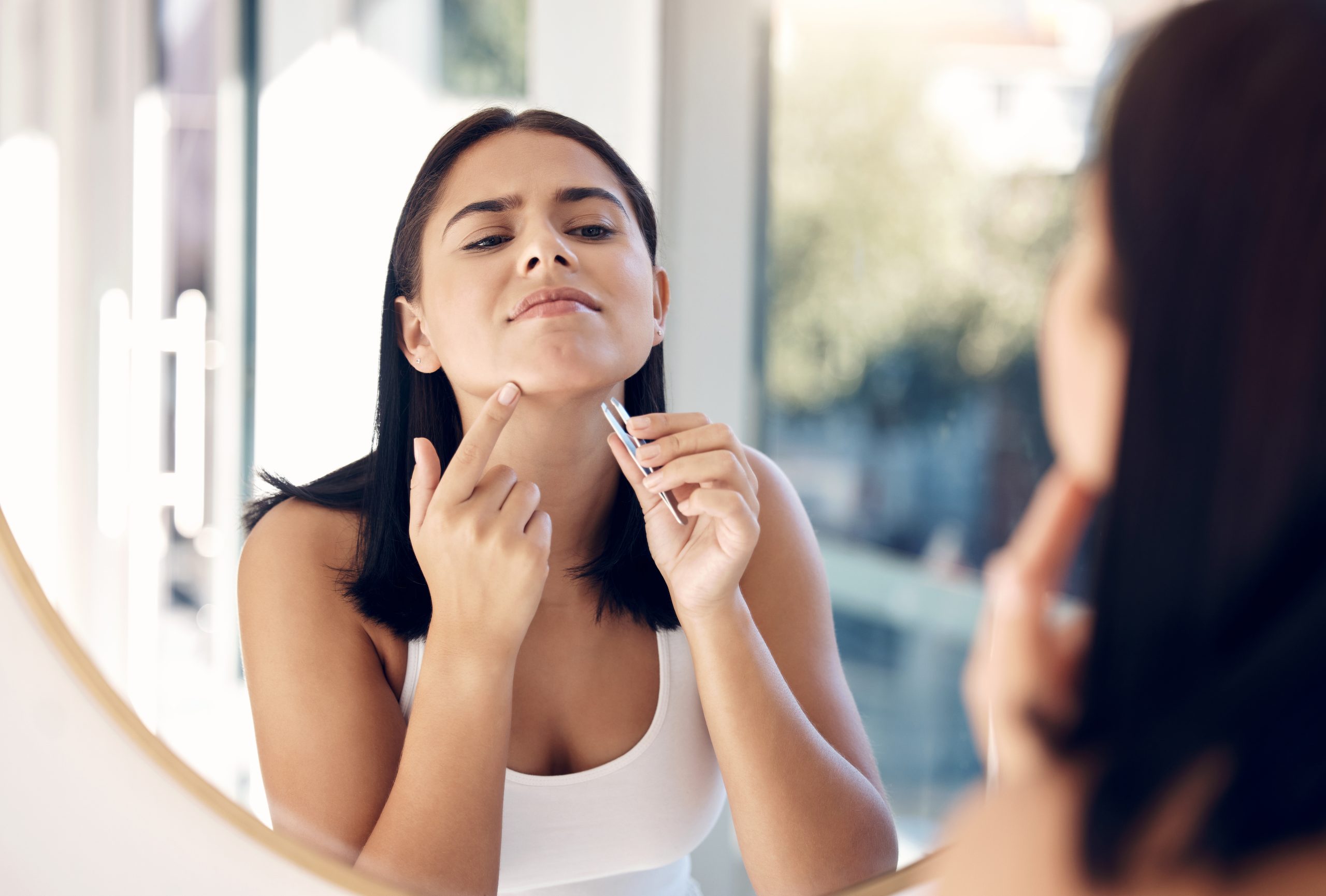
One of the more surprising changes women notice during perimenopause is the appearance of unwanted facial hair. It may start with a few stubborn chin hairs, darker hairs along the jawline, or increased growth on the upper lip. For many women, this change feels frustrating, embarrassing, and completely unexpected.
The good news is that you’re not imagining it, and you’re certainly not alone.
Why Does Facial Hair Increase During Perimenopause?
The answer lies in changing hormone levels.
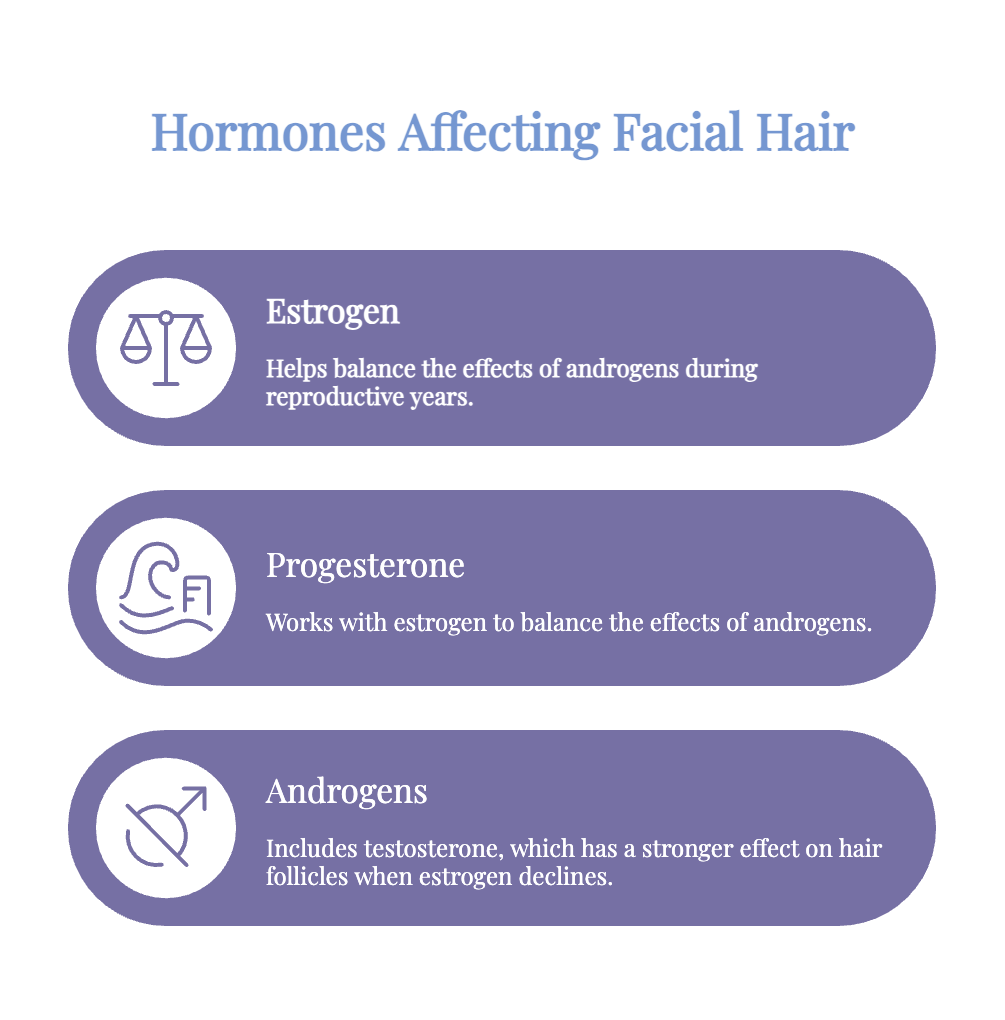
During our reproductive years, estrogen and progesterone help balance the effects of androgens (often referred to as “male hormones”), such as testosterone. While women naturally produce testosterone, it is typically present in much smaller amounts than estrogen.
As women enter perimenopause, hormone production becomes less predictable. Estrogen and progesterone levels begin to fluctuate and gradually decline. Although testosterone also decreases with age, it often does not decline as quickly as estrogen.
This creates a situation where the relative influence of androgens becomes greater.
Think of it like a seesaw. Even if testosterone stays the same or declines slightly, lower estrogen means testosterone has a stronger effect on certain tissues, including hair follicles.
Why the Chin and Jawline?
Not all hair follicles respond to hormones in the same way.
Hair follicles on the chin, jawline, upper lip, chest, and abdomen are particularly sensitive to androgens. When androgen activity increases relative to estrogen, these follicles can begin producing thicker, darker, coarser hairs known as terminal hairs.
At the same time, women may notice the opposite effect on their scalp, where hair can become thinner or shed more easily.
This explains why some women find themselves dealing with both increased facial hair and thinning hair on their head at the same time.
Is Facial Hair During Perimenopause Normal?
For many women, yes.
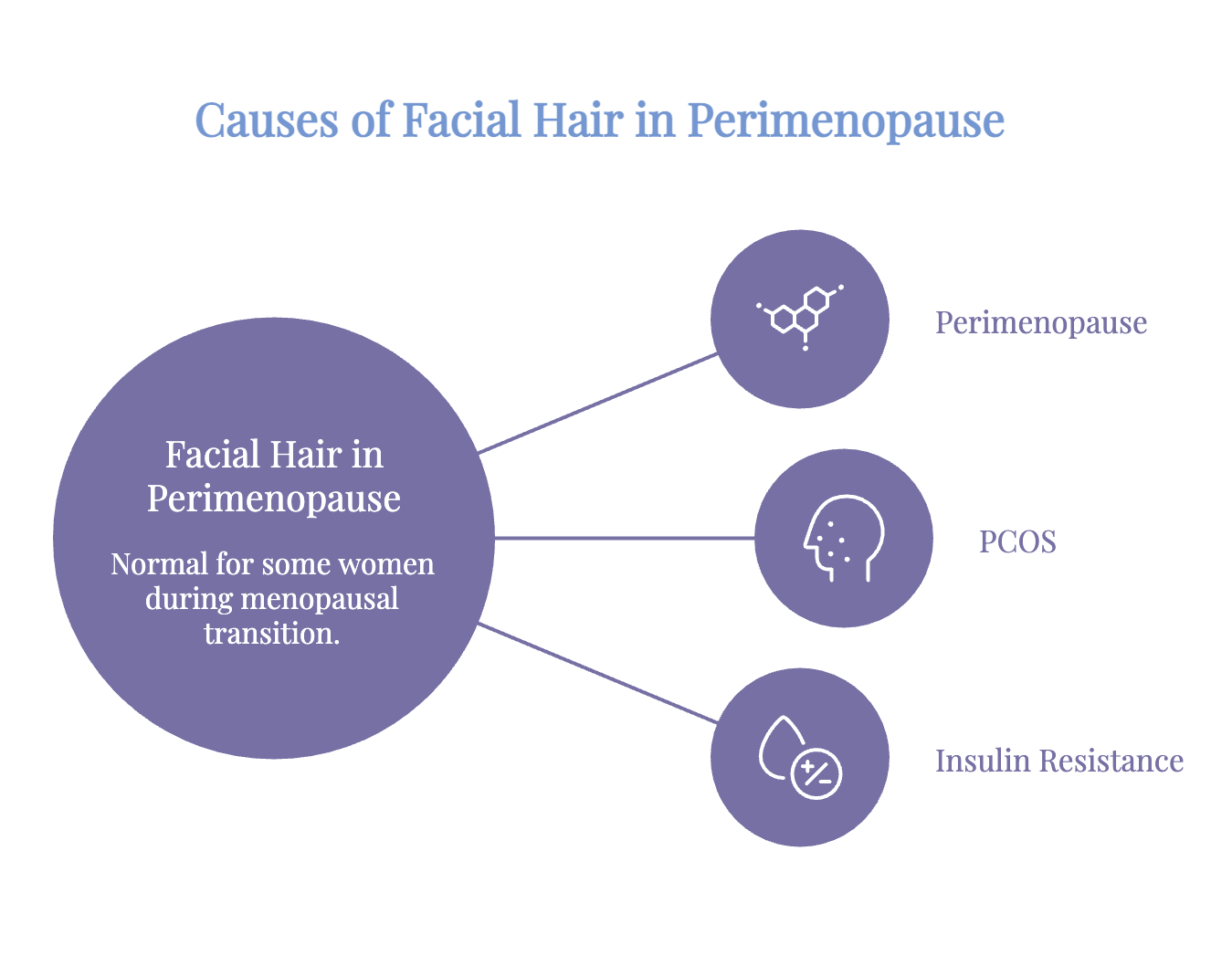
A few chin hairs or increased facial hair growth can be a normal part of the menopausal transition. However, not all facial hair growth is caused by perimenopause alone.
Some women may have underlying hormonal conditions that contribute to excess androgen activity. One of the most common is , a condition that often begins much earlier in life and can be associated with facial hair growth, acne, irregular menstrual cycles, insulin resistance, and fertility challenges.
Women with PCOS often notice facial hair growth in their teens, twenties, or thirties. However, some cases are relatively mild and may not become particularly bothersome until perimenopause, when declining estrogen levels further shift the hormonal balance in favour of androgens.
Insulin resistance can also play a role. Higher insulin levels can stimulate the ovaries to produce more androgens, which may contribute to unwanted facial hair growth. This is one reason why addressing blood sugar regulation can be an important part of managing hormonal symptoms.
When Should Facial Hair Be Investigated?
While some increase in facial hair can be expected during perimenopause, it may be worth seeking further evaluation if the hair growth is:
– Rapidly worsening
– Accompanied by significant scalp hair loss
– Associated with persistent acne
– Accompanied by irregular menstrual cycles
– Associated with deepening of the voice
– Accompanied by increased muscle mass or other signs of excess androgen production
Although perimenopause is often the explanation, healthcare providers may also consider conditions such as PCOS, insulin resistance, adrenal disorders, thyroid dysfunction, or medication-related effects.
What Can Be Done About It?
Management depends on the underlying cause and the severity of symptoms.
Lifestyle Support
For women whose symptoms are influenced by insulin resistance or metabolic health, supportive strategies may include:
– Strength training
– Regular physical activity
– Adequate protein intake
– Blood sugar management
– Stress reduction
– Maintaining a healthy body composition
These approaches can help support hormonal balance and overall metabolic health during midlife.
Medical and Hormonal Approaches
For some women, menopausal hormone therapy (MHT) may help improve the overall hormonal environment, although it is not typically prescribed specifically for facial hair.
Depending on the underlying cause, additional treatment options may be considered to address excess androgen activity.
Cosmetic Treatments
Many women choose to manage unwanted hair through:
– Tweezing
– Waxing
– Threading
– Dermaplaning
– Laser hair removal
– Electrolysis
Laser hair removal tends to work best on darker hairs, while electrolysis can be effective regardless of hair colour.
The Bottom Line
Facial hair growth during perimenopause is incredibly common and is often the result of changing hormone balance rather than an actual increase in testosterone.
As estrogen levels decline, androgens can exert a greater influence on hair follicles, leading to darker, coarser hairs on the chin, jawline, and upper lip. While a few stray hairs are usually a normal part of the menopausal transition, more significant hair growth may sometimes point to other contributing factors such as insulin resistance or PCOS.
If you’re noticing changes in facial hair, scalp hair, weight, energy, or menstrual cycles, a comprehensive hormonal and metabolic assessment can help identify the factors involved and guide an appropriate treatment plan.